Product Selection
Shipments, trade shows and practical guides for choosing, running and maintaining compact equipment.
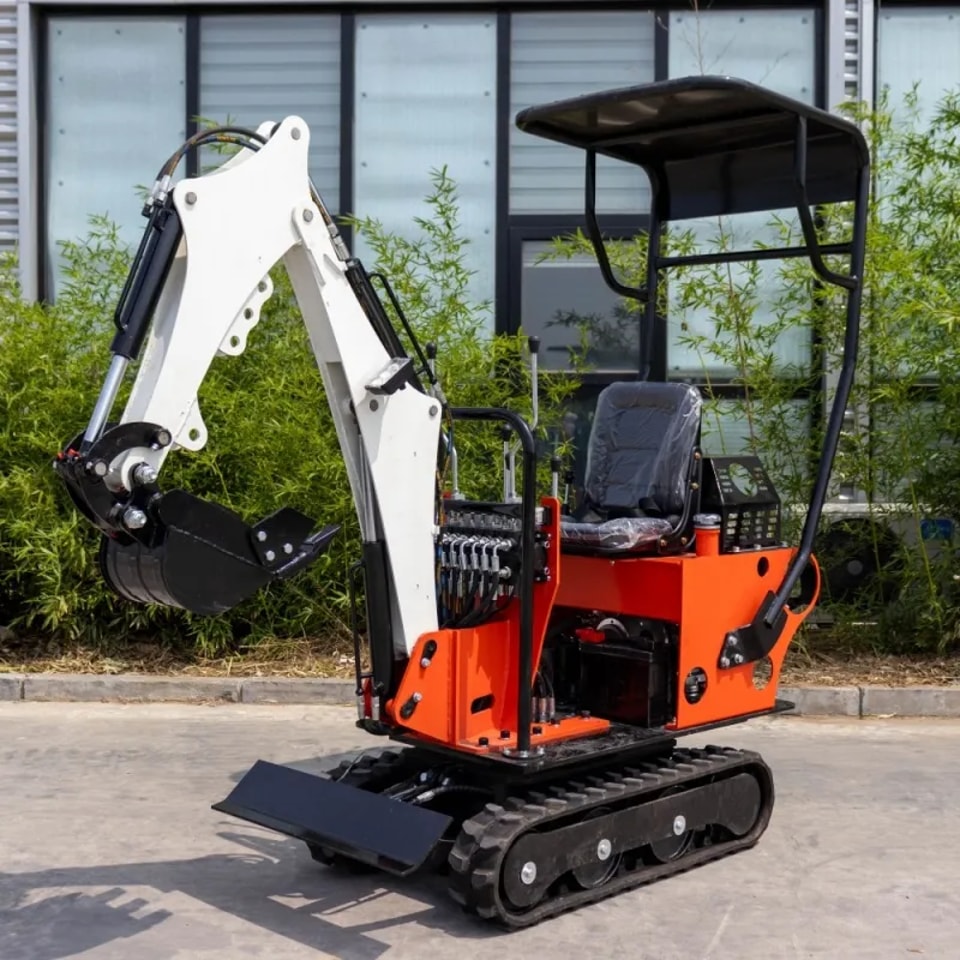
Mini in Size, Explosive in Power Hightop Micro Excavator Family Member – HT08 💪 Ultra-Compact · Zero Tail Swing · Heavy-Duty Performance When people hear "micro excavator," the first thing that comes to mind is "small." And you're right — the Hightop micro excavator is indeed compact. Small enough to slip into narrow alleyways, agile enough to turn around in a courtyard, and so tiny that first-time viewers often exclaim, "That's incredibly mini!" But if you think "small" means "weak," you couldn't be more wrong. Today, let us introduce you to the Hightop HT08 — a member of our micro excavator family that packs explosive power into a pocket-sized frame. 🎯 Perfect for: Indoor demolition · Courtyard renovation · Orchard land clearing · Municipal repairs · Greenhouse operations — wherever big excavators can't go, the Hightop HT08 takes on the job with ease. HT08 Core Specifications & Highlights ⚖️ Operating Weight: 0.8 tons — lightweight, easy to transport and manoeuvre 📏 Machine Width: 720mm ultra-narrow body — fits through garden gates, sheds, indoor doorways, and narrow lanes 🔄 Swing Design: 1100mm small tail radius + 360° zero tail swing — turn without scraping or wasting space ⛽ Power Unit: 12HP powerful engine with Changchai / Kubota-compatible Euro V power — efficient and fuel-saving ⛏️ Working Capacity: Trenching, dredging, breaking, loosening soil, land clearing — a true all-rounder 🔧 Attachment Ready: Quick-change compatibility with breaker hammers, grapples, augers — one machine, multiple uses 🏗️ Build Quality: Reinforced boom + imported hydraulic hoses + branded tracks — built to last 💥 Mini in size, strength never compromised. Hightop HT08 — Your reliable choice for confined-space construction. 📧 info@hightoptools.com | 📞 WhatsApp: +86 181 6205 2962

I. HT550 Remote Control Grass Cutter: Engineered for High Efficiency 200m Remote Operation Using 2.4G technology, you can operate this cordless remote control mower from up to 200 meters away. By using a remote operated lawn mower, you can stay in the shade and avoid heatstroke while managing steep slope mowing tasks from a safe distance. Best Remote Controlled Mower for Safety 2,000㎡/h Efficiency Powered by a robust engine, this high-efficiency RC mower can clear up to 2,000㎡ per hour. It is a top-tier industrial remote control lawn mower designed for rapid clearing of orchards, sports fields, and municipal green spaces. Industrial Remote Control Slope Mower 20–150mm Adjustable Height The cutting height of this remote control grass cutter can be adjusted instantly via the controller. This makes it a versatile all-terrain remote mower suitable for everything from fine lawn maintenance to clearing dense, overgrown brush. Versatile Remote Mowing Machine Rubber Track System Equipped with a durable crawler chassis, this tracked remote control lawn mower offers superior grip on 0–45° inclines. It is widely recognized as a reliable slope mower for hills and rugged landscapes where traditional mowers fail. Heavy-Duty Tracked Remote Mower Smart Features of the HT550 RC Grass Cutter ✓ Dual LED Headlights: Work in low-light conditions to avoid midday sun. ✓ Reinforced Steel Frame: Protects machine in harsh environments. ✓ Intuitive Controller: Easy operation for beginners. II. Summer Mowing Peak: Lower Costs with a Remote Operated Mower Switching to a remote control slope mower can reduce manual labor by 90%. During the busy season, the HT550 remote control grass trimmer ensures faster completion of large-area mowing projects and enhanced safety on slippery or steep terrain. As a leading remote control lawn mower manufacturer, we offer factory-direct wholesale pricing for global B2B buyers looking for high-quality robotic slope mowers. This remote control grass cutter is designed to deliver a high ROI for landscaping companies and equipment rental fleets. III. 5 Safety Tips for Operating Your Remote Control Lawn Mower 1. Avoid Midday Heat Operate your RC grass cutter during cooler morning or evening hours to protect the engine and extend life. 2. Dry Conditions Only Use your remote control lawn mower on dry grass to prevent clogging the mower blades or slipping. 3. Clear Debris Always inspect the area before starting to remove stones or wires that could damage the machine. 4. Slope Stability When using a remote control slope mower on inclines, maintain a steady speed to ensure traction. 5. Routine Maintenance Regularly clean the underside and check filters to ensure long-term reliability. HT550 – Professional remote control lawn mower designed for safety, efficiency, and slope adaptability.
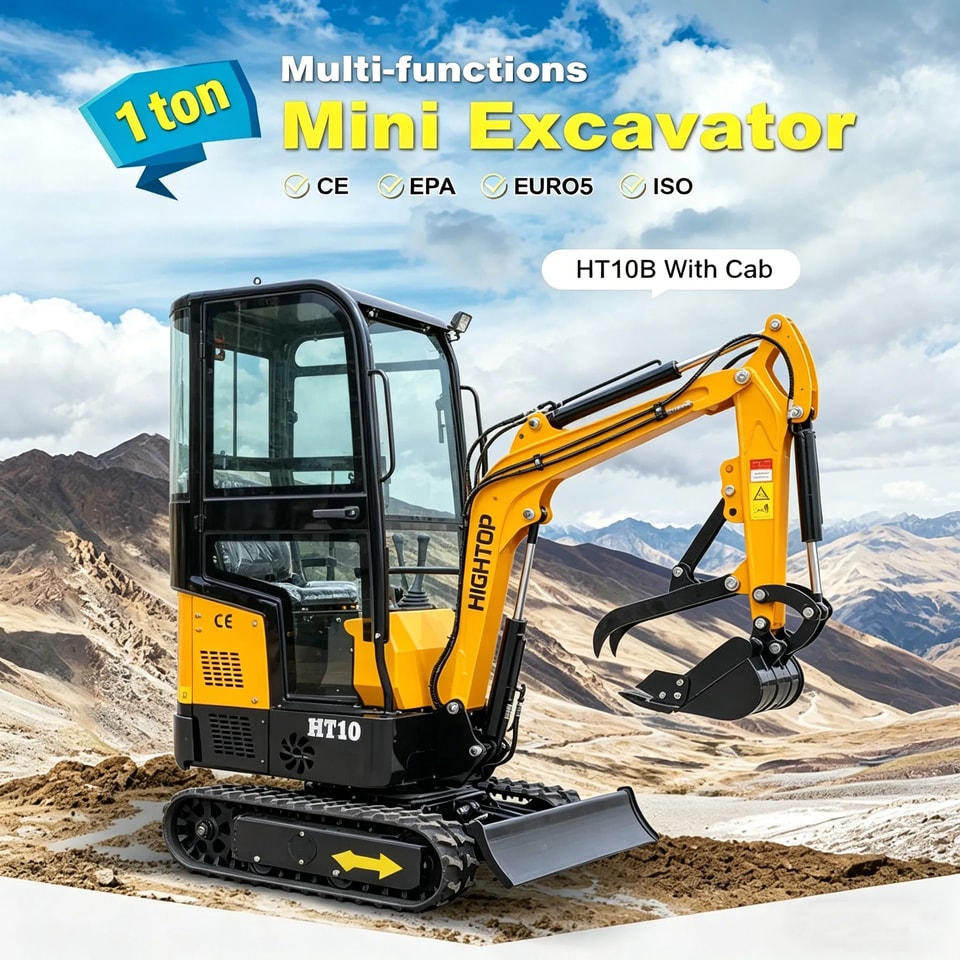
Are you searching for a reliable 1 ton mini excavator for sale that can handle backyard landscaping, farm trenching, or indoor demolition without breaking the bank? You've probably noticed there are dozens of small diggers on the market — from unknown Chinese brands to expensive European and American machines. So why does the HT10B compact excavator consistently outsell most competitors year after year? Why do contractors keep calling it the best value 1-ton mini excavator? Let's move past the marketing claims and look at three key areas where the HT10B 1 ton digger clearly separates itself from the pack: engine compliance, compact usability, and real cost-effectiveness. The following information is directly verified from the official HT10B product page. 1. Engine Performance: EPA Tier 4 Final & Euro Stage V Compliance The engine is the heart of any small crawler excavator. And this is where many cheap mini diggers fail — especially when importing into regions with strict environmental rules like the US or Europe. Here is what makes the HT10B a compliance-ready mini excavator: KOOP 192F engine (standard) – Single cylinder, fan-cooled, rated power 7kw @ 3000r/min. A popular choice to meet Europe emission demand. Briggs & Stratton or YANMAR (optional) – Specifically cooperated for customers who need a small excavator for sale USA that is EPA Tier 4 Final certified. Domestic well-known brand Changchai 192F engine also available for strong power and stable working. Many other factories use common diesel engines that cannot meet US or Europe emission demands. That means you could buy a cheap mini excavator only to find it can't be legally operated or resold in your region. ✅ Bottom line: If you want a 1 ton excavator for landscaping or construction that is already compliance-ready, the HT10B solves your regulatory headache before you even receive the machine. Feature HT10B – Narrow Access Excavator (Official Specs) Typical Competitor Track width (retracted) 830 mm (minimum stretch) * 900-950 mm (fixed) Track width (extended) 1000 mm (maximum stretch) 900-950 mm Chassis width 896 mm (standard) Typically >950 mm Fits narrow door (85cm) ✅ Yes – retractable undercarriage ❌ Usually not Boom swing angle 60° left & right (standard) 30° or fixed boom *Verified from official HT10B spec: "The crawler can be stretched from minimum 830 to maximum 1000mm which and can pass through more narrow places." 2. Compact Design: A Narrow Access Excavator That Goes Where Others Can't The whole point of buying a 1 metric ton mini excavator is to work in tight spaces. The HT10B small excavator features a retractable undercarriage adjustable from 830 mm to 1000 mm. Standard chassis width is 896 mm, track width 180 mm. This allows you to squeeze through a standard garden gate (retracted), then widen for stability on site. Additionally, the boom can deflect 60 degrees left or right as standard equipment, allowing digging along foundations without constantly repositioning the machine — making it one of the most flexible small excavators for sale in its class. Key dimensions: Overall L×W×H 2775×930×2219 mm. Max digging depth 1650 mm, max digging height 2610 mm, max ground digging radius 2850 mm, min rotation radius 1330 mm. 3. Cost-Effectiveness: Factory-Direct Pricing Without Sacrificing Quality An equivalent European or American 1 ton excavator can easily cost $12,000 – $15,000 USD. The HT10B mini digger is priced at a fraction of that — thanks to factory-direct supply. *The price range above is for reference only and typically represents our FOB (Free On Board) China basis. We also support other delivery terms — such as CNF, CIF, or DDP — depending on customer requirements. Final landed costs vary based on shipping, tariffs, and optional accessories. Contact us for a firm quote. Lower price doesn't mean lower quality. The HT10B boasts a first-class configuration directly from the official spec sheet: Verified Components of HT10B (from official product page): Component HT10B Source (Official) What Others Use Main hydraulic pump Japan (G5-6 pump, 6.8ml/r) Low-cost Chinese pump Main valve & swing motor Italy SANYANG (BMRS-250) Generic domestic brands Traveling motor Italy SANYANG (BMT-245) Low-quality motors Hydraulic hoses Continental AG Germany – Not easy to leak No-name hoses (leak after 1 year) Structural processing Japan Komatsu supporting manufacturers – Shot blasting, pickling, phosphating, spraying Simple polish + spray paint (rusts easily) Anti-rust treatment Entire vehicle shot blasted + pickling + phosphating + spray None (just spray paint) You also get real-world features that most budget mini excavator competitors skip: Pressure reducing valve – Makes starting the machine noticeably easier. Adjustable dozer blade – Length adjusts from 84 cm to 105 cm; working height adjusts from -15 cm to +15 cm. Max upgrade height 345 mm, max digging depth 255 mm. 100 kg counterweight added at the rear – More stability and digging power. Digging bucket capacity: 0.025 cbm / 120 kg, bucket width 380mm. Travel speed: 1.5 km/h. HT10B Key Specifications Overview Parameter Value Model HT-10 Operating Weight 1000 kg Bucket Capacity 0.025 cbm / 120 kg Standard Engine KOOP 192F (7kw @ 3000r/min) Optional Engine BRIGGS & STRATTON / YANMAR Overall Dimensions (L×W×H) 2775 × 930 × 2219 mm Retractable Track Range 830 mm – 1000 mm Max. Digging Depth 1650 mm Max. Digging Height 2610 mm Boom Swing Angle 60° Left / Right Travel Speed 1.5 km/h Why the HT10B is the Smartest Small Excavator Investment for 2026 Comparison Point HT10B (Verified Official Specs) Cheap No-Name Brand Expensive US/EU Brand EPA Tier 4 Final / Euro Stage V ✅ Yes (KOOP/Briggs options) ❌ Usually not ✅ Yes Fits through 85 cm doorway ✅ Yes (830mm retracted track) ❌ No Usually not Imported hydraulics ✅ Japan pump + Italy SANYANG motors/valve ❌ Local only ✅ Yes Continental hydraulic hoses ✅ Germany (leak-resistant) ❌ No-name hoses Variable Boom swing angle ✅ 60° left/right standard 30° or fixed Usually 50-60° Adjustable dozer blade ✅ Length 84-105cm, height -15 to +15cm Fixed length only Sometimes adjustable Pricing model Factory-direct FOB China Unknown $12,000 – $15,000+ 📦 View HT10B Product Page → 💰 Get a Quote → 📦 Want to Know the Shipping Cost to Your Country? Get an accurate shipping quote for the HT10B compact excavator — on your preferred trade terms (FOB, CNF, CIF, or DDP). We'll calculate the best freight rate to your port or address. Tell us your port or postal code and preferred delivery term. ✉️ Get a Quote Now → 📞 WhatsApp / online inquiry | Response within 24h Disclaimer: All specifications, pricing, and delivery terms are subject to change without notice. Specifications shown are directly sourced from the official HT10B product page at sdchinamachine.com. Prices shown are reference only for FOB China basis. Please contact us for a written quotation. © 2026 Shandong Hightop Machinery | Factory-direct mini excavator specialist. All HT10B specifications verified from official product page: Japan pump, Italy SANYANG motors, Germany Continental hoses, retractable track 830-1000mm, 60° boom swing, adjustable blade.

Shandong Haituo Group | Invitation to SaMoTer 2026, Italy 📍 Hall 10 – Stand C3-1 A new journey begins with a grand gathering, as we travel far to meet you. Shandong Haituo Group sincerely invites global partners and industry colleagues to join us in Europe for this annual industry event! We are proud to announce our major presence at SaMoTer 2026, the International Construction Equipment Exhibition in Verona, Italy. We will bring our full range of high-quality equipment to the European show floor, connecting global opportunities with our innovative products and exploring the future of the European market with our professional expertise. I. A Prestigious Industry Event with Deep Heritage SaMoTer (Verona International Construction Equipment Exhibition) is one of Europe's three leading professional exhibitions for construction machinery. Held for decades in Verona, Italy, it reaches markets across Southern Europe, the Mediterranean, and the Balkan region. As a key platform showcasing technology trends, new products, and global trade, each edition attracts renowned international brands, industry experts, quality buyers, contractors, and distributors. 🌍 For Chinese construction equipment manufacturers, SaMoTer is a prime opportunity to enter the European market, establish international partnerships, and connect with global resources. II. Exhibition Details at a Glance 📅 Date May 6 – 9, 2026 📍 Venue Verona, Italy 🏢 Booth Hall 10, Stand C3-1 III. Full Range of Premium Products on the European Stage At this exhibition, Haituo Group will showcase its core products, demonstrating our brand strength across the board: 🚜 Mini Excavators 📡 Remote-Controlled Crawler Equipment 🚚 Small Crawler Dumpers ⚙️ Multi-functional Machinery With years of experience in global markets, our equipment is known for its reliable performance, high cost-effectiveness, and flexible customization services. IV. Connecting Through Equipment, Partnering for the Future Across mountains and seas, we are excited to reconnect with old friends and meet new industry partners. From product walkthroughs to long-term channel development, let us explore the potential of the European market together. See You in Verona! SHANDONG HAITUO GROUPYour reliable partner for compact & intelligent equipment solutions.

As the North American construction equipment industry turns its attention to Toronto, a major industry event is about to begin! On April 23–24, 2026, the National Heavy Equipment Show will grandly open in Mississauga, Toronto. Shandong Hightop Group cordially invites you to join us at Booth 1242 for this annual gathering of the engineering equipment industry! A Sneak Peek at the Highlights As one of North America’s most influential heavy equipment exhibitions, this event brings together numerous renowned brands, technical experts, and industry buyers from the global engineering equipment sector. It serves as a platform to showcase cutting-edge technologies, expand into overseas markets, and deepen industry collaboration. · Covering core North American markets and connecting with partners in engineering, construction, and rental sectors across Canada and North America · Showcasing cutting-edge technologies and innovative products to capture the latest trends in global engineering equipment Hightop Group Invites You to Witness Our Strength Hightop Group has always placed technology at the core and quality as its foundation, focusing on the R&D, manufacturing, and export of engineering equipment. Our products are exported to numerous countries and regions worldwide and have earned widespread recognition from partners both domestically and internationally. At this exhibition, we will make a grand debut with several of our flagship compact engineering equipment models: The flexible and durable micro excavator (HT18-3) The powerful tracked skid-steer loader (HTHY382T) The versatile compact engineering work machine (compact skid-steer land clearer) Each product embodies Hightop ’s rigorous pursuit of quality and deep understanding of our partners’ needs, offering reliable and hassle-free solutions for construction, landscaping, and rental applications. Exhibition Overview Dates: April 23–24, 2026 Location: 6900 Airport Road, Mississauga, ON L4V 1E8 (Mississauga, Toronto, Canada) Hightop Booth No.: 1242 We Look Forward to Seeing YouHightop Group is always eager to collaborate with global industry partners, connecting global markets through high-quality products and empowering industry development with professional services. See you in Toronto in April 2026! We look forward to welcoming you at Booth 1242 to discuss cooperation and build a shared future!
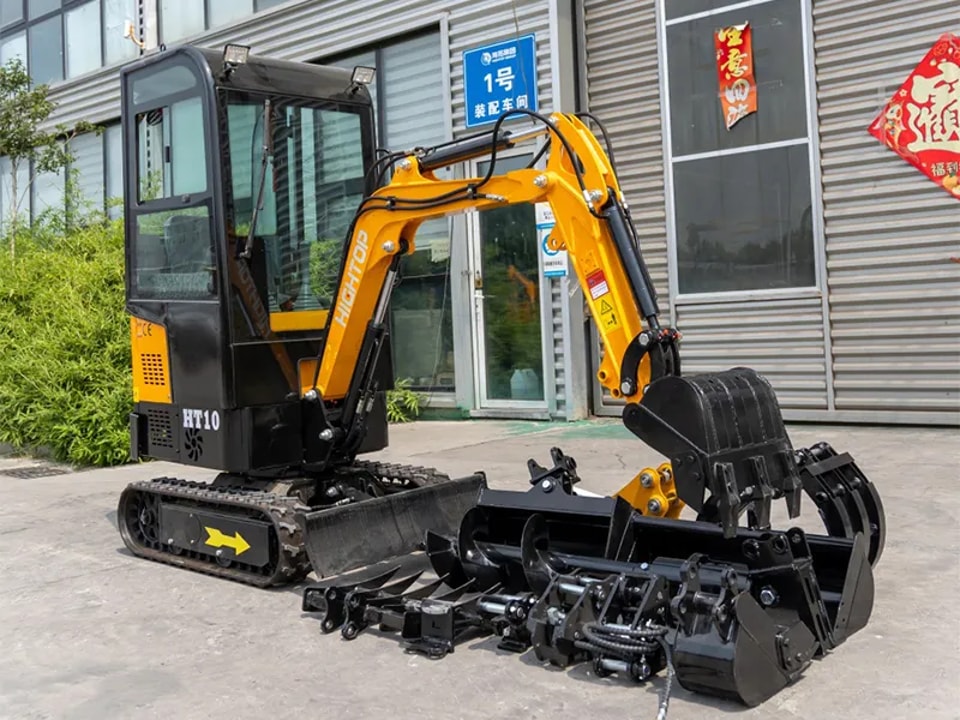
I. Performance Differences Between 1-ton Electric and Fuel-powered Excavators As core equipment in engineering construction, electric excavators and fuel-powered excavators have significant performance differences when combined with the operation characteristics of 1-ton models, adapting to different operation needs. The 1-ton fuel-powered excavator is equipped with a small diesel engine, featuring stable and strong power output, suitable for heavy-load operations in small sites, fast start-up speed, no endurance anxiety, and can meet the needs of high-intensity continuous operations. The 1-ton electric excavator has a more agile power response, optimized for lightweight operation scenarios, with operating noise controlled within 60 decibels (much lower than the 75-85 decibels of the same-level fuel-powered model), small vibration, smooth operation, no exhaust emissions, and outstanding environmental protection, but its endurance depends on battery capacity, and the duration of heavy-load operations is limited. II. Energy Consumption Comparison Between 1-ton Electric and Fuel-powered Excavators Based on the 1-ton excavator as the benchmark, the energy consumption difference between the two is significant, which is mainly caused by the difference in energy conversion efficiency. The fuel-powered model is powered by diesel, with a fuel consumption of about 0.8-1.2 liters per hour under conventional operation intensity; the 1-ton electric excavator relies on charging, with a power consumption of about 5-8 kWh per hour, and the unit operation energy consumption is only 30%-50% of that of the same-level fuel-powered model. The core reason for this difference is that electric excavators have no diesel combustion loss, with an energy conversion efficiency of 85%-90%, while fuel-powered models have an energy conversion efficiency of only 30%-40%, with most energy lost in the form of heat. Meanwhile, the fuel-powered model requires regular engine maintenance and oil filter replacement, with a relatively short maintenance cycle (routine maintenance is required every 50-100 hours); the electric model has a simple maintenance process, only requiring regular inspection of battery status and endurance capacity, and motor maintenance, without complex engine maintenance, with significant long-term operational advantages. III. Application Scenario Analysis of 1-ton Electric and Fuel-powered Excavators Combined with the lightweight and flexible characteristics of 1-ton models, the two types of excavators have different applicable scenarios. The fuel-powered model is more suitable for small-scale mines and short-distance heavy-load outdoor operations. With the advantage of no endurance limit, it can meet the needs of long-time continuous operations, and its flexible body can shuttle in narrow outdoor sites. The electric model is more suitable for small-scale urban municipal maintenance, indoor decoration and transportation, and construction around residential areas. Its lightweight body will not damage the road surface, and the low noise (within 60 decibels) and no exhaust emissions can meet the requirements of environmental protection and noise control. It is also applicable to short-distance, intermittent operations and sites with convenient charging.
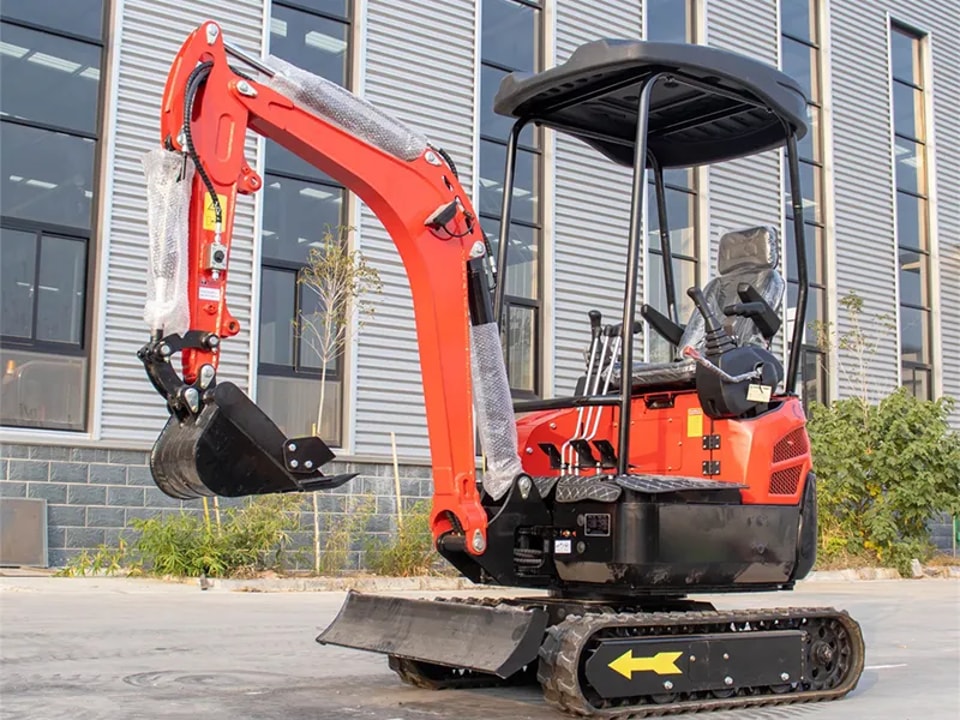
The hydraulic system serves as the power lifeline of an excavator, using hydraulic oil as the transmission medium to convert the mechanical energy output by the engine into high-pressure hydraulic energy. This energy is then accurately distributed to actuators such as hydraulic cylinders and travel motors via control components, completing a full set of heavy-duty operations including boom lifting, bucket digging, slewing and traveling. Among them, the main pump and multi-way valve are the two core components of the hydraulic system, which directly determine the machine’s operating efficiency, movement smoothness and load capacity. They are also the key targets of daily troubleshooting, and most hydraulic system faults can be resolved by focusing on these two components. As the power source of the system, the main pump mostly adopts a swash-plate axial variable displacement piston pump. Its core function is to complete energy conversion, and automatically adjust the flow according to the load size, increasing speed under light load and enhancing force under heavy load, balancing operating efficiency and digging power. Main pump faults are mostly universal problems, commonly presenting as slow and weak overall movement, abnormal noise and overheating. The root causes are usually oil suction pipe leakage, internal piston pair wear, regulator jamming or excessive internal leakage. Troubleshooting follows the principle from easy to difficult: first check the hydraulic oil level, quality and filter, then test the system pressure to judge internal leakage. The multi-way valve is the control center of the system, integrating various valves such as reversing, overflow, locking and regeneration. It is responsible for accurately regulating the direction, flow and pressure of hydraulic oil to ensure precise single movement and coordinated composite movements. Multi-way valve faults are mostly local problems, commonly including stuck single action, automatic boom sinking, travel drifting and uncoordinated composite movements, mostly caused by spool jamming, locking valve seal failure or excessive valve internal leakage. Focus on cleaning the spool and testing the locking valve performance to quickly locate and fix faults. Regularly replacing qualified hydraulic oil and special filters, and checking pipeline seals can effectively reduce the failure rate of core components and extend the service life of the whole machine.
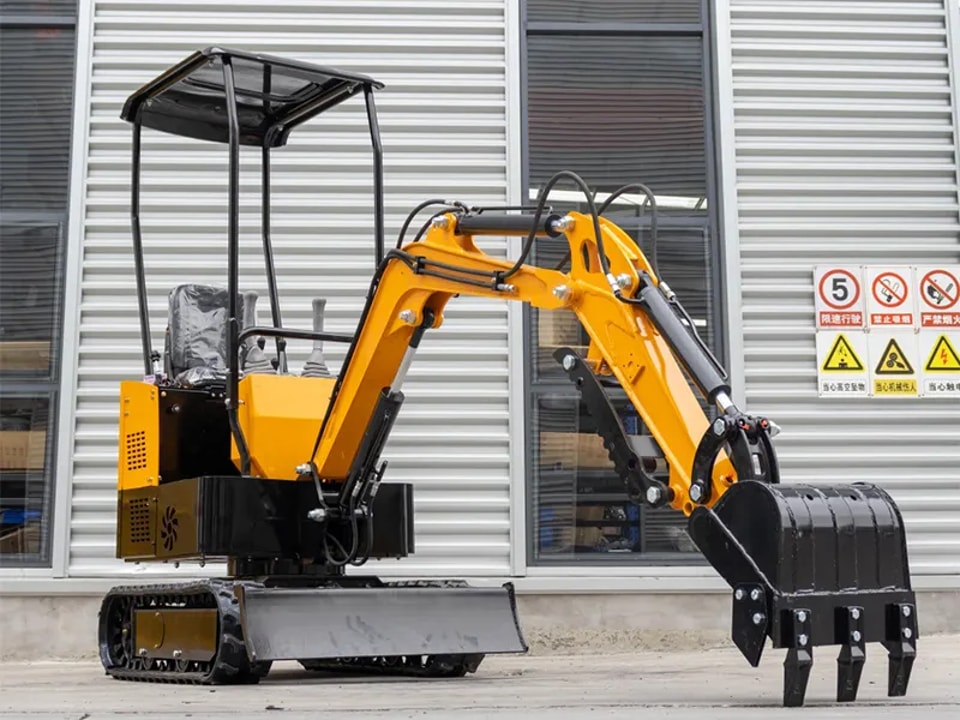
I. Performance Differences Between 1-ton Electric and Fuel-powered Excavators As core equipment in engineering construction, electric excavators and fuel-powered excavators have significant performance differences when combined with the operation characteristics of 1-ton models, adapting to different operation needs. The 1-ton fuel-powered excavator is equipped with a small diesel engine, featuring stable and strong power output, suitable for heavy-load operations in small sites, fast start-up speed, no endurance anxiety, and can meet the needs of high-intensity continuous operations. The 1-ton electric excavator has a more agile power response, optimized for lightweight operation scenarios, with operating noise controlled within 60 decibels (much lower than the 75-85 decibels of the same-level fuel-powered model), small vibration, smooth operation, no exhaust emissions, and outstanding environmental protection, but its endurance depends on battery capacity, and the duration of heavy-load operations is limited. II. Energy Consumption Comparison Between 1-ton Electric and Fuel-powered Excavators Based on the 1-ton excavator as the benchmark, the energy consumption difference between the two is significant, which is mainly caused by the difference in energy conversion efficiency. The fuel-powered model is powered by diesel, with a fuel consumption of about 0.8-1.2 liters per hour under conventional operation intensity; the 1-ton electric excavator relies on charging, with a power consumption of about 5-8 kWh per hour, and the unit operation energy consumption is only 30%-50% of that of the same-level fuel-powered model. The core reason for this difference is that electric excavators have no diesel combustion loss, with an energy conversion efficiency of 85%-90%, while fuel-powered models have an energy conversion efficiency of only 30%-40%, with most energy lost in the form of heat. Meanwhile, the fuel-powered model requires regular engine maintenance and oil filter replacement, with a relatively short maintenance cycle (routine maintenance is required every 50-100 hours); the electric model has a simple maintenance process, only requiring regular inspection of battery status and endurance capacity, and motor maintenance, without complex engine maintenance, with significant long-term operational advantages. III. Application Scenario Analysis of 1-ton Electric and Fuel-powered Excavators Combined with the lightweight and flexible characteristics of 1-ton models, the two types of excavators have different applicable scenarios. The fuel-powered model is more suitable for small-scale mines and short-distance heavy-load outdoor operations. With the advantage of no endurance limit, it can meet the needs of long-time continuous operations, and its flexible body can shuttle in narrow outdoor sites. The electric model is more suitable for small-scale urban municipal maintenance, indoor decoration and transportation, and construction around residential areas. Its lightweight body will not damage the road surface, and the low noise (within 60 decibels) and no exhaust emissions can meet the requirements of environmental protection and noise control. It is also applicable to short-distance, intermittent operations and sites with convenient charging.
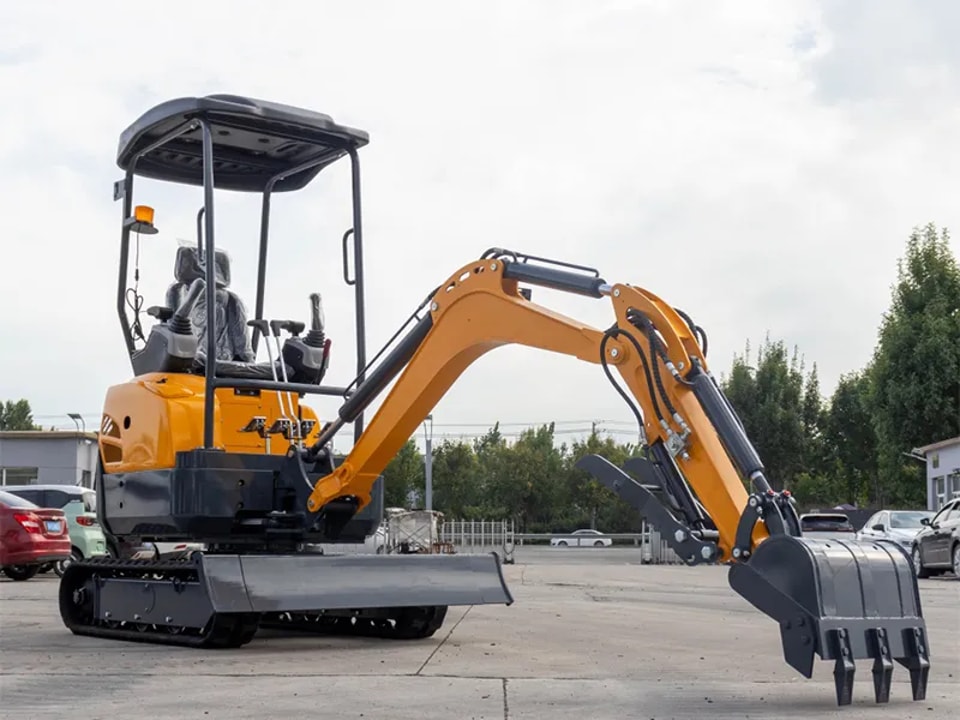
The single-pump and dual-pump systems of excavators differ significantly in structure, function, and application scenarios. The core difference lies in the fact that the dual-pump system provides multiple hydraulic oil outputs through two independent pump bodies, thereby supporting more complex compound actions and higher work efficiency, while the single-pump system has a simple structure and is usually used for small or low-load equipment. Structural Differences: A single-pump system contains only one hydraulic pump, is compact, and has a lower cost, making it suitable for small excavators. A dual-pump system consists of two pump bodies (such as gear pumps or piston pumps) connected by a coupling or flange. Common configurations include dual-pump single-circuit or dual-pump dual-circuit systems. Some models also include a pilot pump (such as a gear pump) in series to simplify layout. Working principle 1. Single pump system: The flow rate is fixed, and the speed is adjusted by a throttle valve. All actuators (such as boom and bucket) share the same oil circuit. Insufficient oil pressure or delayed action may occur during combined operation. 2. Dual-Pump System: Dual-Circuit Design: Two pumps drive different circuits (e.g., one pump controls the boom, the other controls the bucket), enabling independent operation of multiple actions without interference. Power Distribution: The two pumps can operate in parallel or in series. In parallel operation, they utilize engine power to improve efficiency; in series operation, a through-shaft structure enables high-pressure output (rated pressure up to 34MPa). Variable capacity: Modern dual pumps mostly use variable pumps, which automatically match the load by adjusting the swashplate angle to reduce power loss. Performance Characteristics 1. Single-pump system: Advantages include simple structure and low maintenance cost, but low efficiency in compound actions, and it is only suitable for light-load or single-task scenarios. 2. Dual-Pump System: Advantages: Supports simultaneous operation of multiple actuators (such as combined traveling and rotating movements), provides stable oil pressure and fast response; reduces hydraulic shock through dual-circuit design, extending component life. Limitations: Complex structure, higher cost, and stricter requirements for hydraulic oil cleanliness.

Enquiry about