Product Selection
Shipments, trade shows and practical guides for choosing, running and maintaining compact equipment.
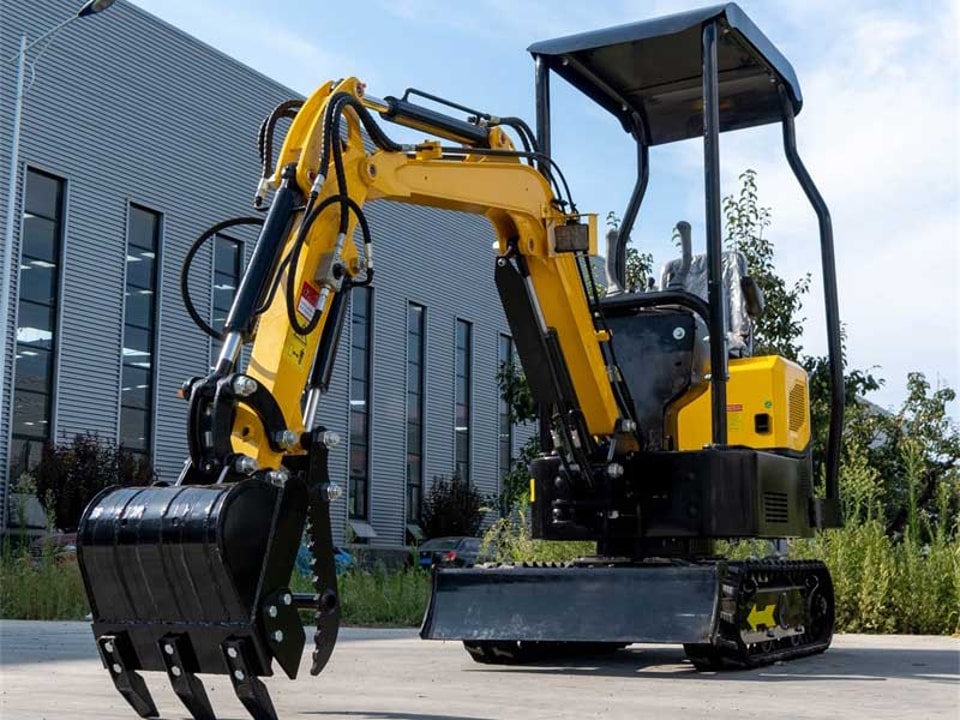
When planning construction,landscaping,or DIY projects,the ability to maneuver equipment like mini diggers through gates is a common concern.Mini diggers,or mini excavators,are compact and versatile machines ideal for tight spaces,but their size can pose challenges when accessing certain areas. Understanding Mini Digger Dimensions Mini diggers come in various sizes,typically ranging from 1 to 8 tons.Their widths generally vary between 28 inches(71 cm)and 60 inches(152 cm).For example,a compact mini digger may measure around 36 inches(91 cm)wide,while larger models can approach 60 inches.Therefore,knowing the specific width of your mini digger is crucial when considering whether it can fit through a gate. Gate Dimensions Gates also come in different sizes,with standard garden gates usually ranging from 36 inches(91 cm)to 48 inches(122 cm)wide.Commercial gates can be wider,often exceeding 60 inches(152 cm).To determine if a mini digger can fit through a gate,you must measure both the digger's width and the gate's width.If the digger's width is less than the gate's width,it should theoretically fit. Factors to Consider Gate Type:The design of the gate matters.Swing gates require space to open,while sliding gates can provide easier access.If a swing gate opens inward,ensure there’s enough clearance for the digger to enter. Attachments:The width of the mini digger can change depending on the attachments used.A wider bucket or tool can prevent the digger from fitting through the gate,so it’s essential to consider the overall width with attachments. Turning Radius:The turning radius is also important.A narrow gate may require careful maneuvering,which could be challenging in tight spaces. Ground Conditions:The ground leading to the gate should be stable enough to support the mini digger.Soft or uneven terrain can complicate entry and exit. Weight Restrictions:Some gates may have weight limits due to their construction.Ensure the mini digger does not exceed these limits to avoid damage. Measuring for Fit To determine if a mini digger can fit through a gate,follow these steps: Measure the Digger:Use a tape measure to find the width of the mini digger at its widest point,including attachments. Measure the Gate:Measure the gate's width from the inside edges of the posts. Consider Clearance:Allow for additional clearance on either side of the digger for maneuvering. Practical Tips for Accessing Tight Spaces If your mini digger can fit through the gate,consider these tips for safe operation: Plan Your Route:Identify potential obstacles and ensure a clear path. Clear the Area:Remove debris or obstacles from the gate area. Use Spotters:Employ a spotter to guide the digger operator in tight spaces. Alternatives if the Digger Won’t Fit If the mini digger cannot fit through the gate,consider: Removing the Gate:Temporarily taking off the gate can provide access. Using a Smaller Machine:Opt for a smaller machine that fits the space. Manual Labor:For very tight areas,manual labor may be necessary. Conclusion In conclusion,whether a mini digger can fit through a gate depends on the dimensions of both the digger and the gate,as well as other factors like ground conditions and gate type.By carefully measuring and planning,you can ensure efficient access for your mini digger,making your project smoother and more effective.
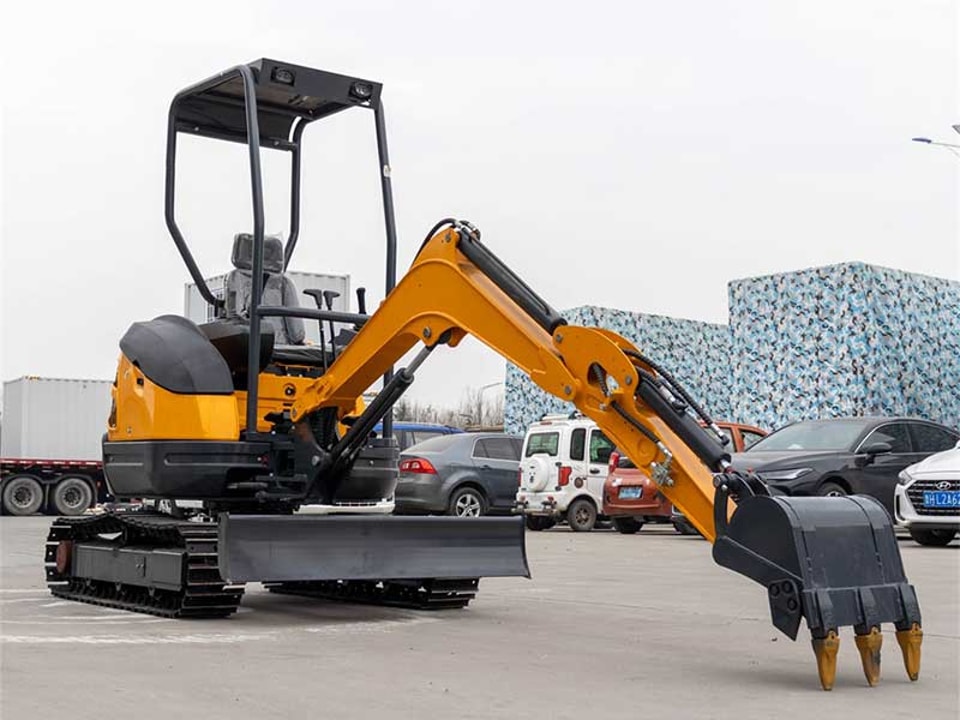
High rise buildings can be seen everywhere in the city, and the emergence of these high-rise buildings is also inseparable from the efforts of the construction department. Now there is environmental pollution everywhere. What needs to be considered for constructors is environmental protection skills. Therefore, when seeing all kinds of equipment on the current market, some people will choose micro excavators and small excavators. Since there are small excavators and mini excavators, it has also brought changes to the whole construction environment. Compared with traditional excavators, first of all, there is a significant reduction in volume, which can not only reduce the floor area, but also be more convenient in transportation. The key is to effectively reduce oil consumption, achieve energy saving and optimize environmental protection. Over the years, the utilization rate of small excavators and mini excavators has gradually increased because it has a wide application environment and will have better efficiency and quality in the current construction team. In addition to these, noise pollution is also common in the production process. After noise pollution, it will have an invisible impact on human physical and mental health. Small excavators do well in this regard. They can really reduce noise, effectively promote the efficiency with staff and effectively ensure the safety of operation. Therefore, it is worth choosing. After seeing the whole content, people will also know that it is no wonder that in the current production environment, the probability of the emergence of small excavators is relatively high.
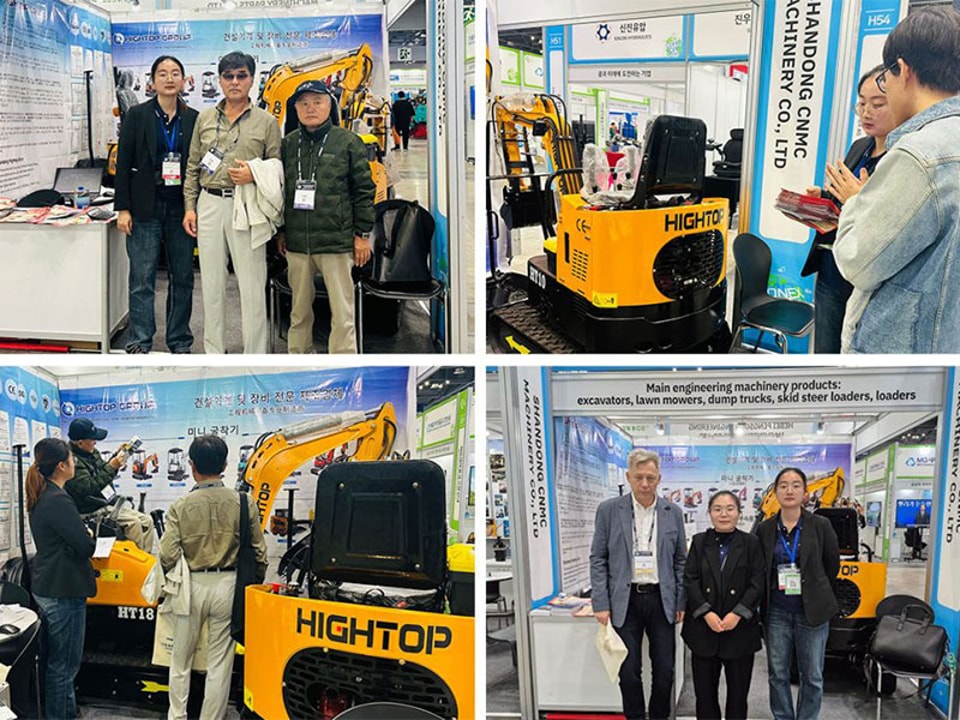
The Korea International Construction Machinery Exhibition (KICME) was held at KINTEX International Exhibition Centre from 24th to 27th October, 2024, and Hightop Group participated in the exhibition with two of its star products--HT18 and HT10B excavators. During the four-day exhibition, Hightop Group displayed new technological innovations and product designs, attracting the attention of many professional visitors and potential partners from all over the world. HT18, as a powerful 1.8-tonne mini excavator, won wide acclaim for its excellent performance, high efficiency and energy-saving and environmentally friendly features; and HT10B 1-tonne mini excavator won wide acclaim for its flexible operability, compact design, and its ability to be applied to construction in many complex environments won unanimous praise from visitors. During the exhibition, Hightop Group also arranged a number of on-site demonstrations and technical exchanges, which not only showcased the products' practical operation capabilities, but also held in-depth technical discussions with industry experts and customers. In addition, representatives of the Group also made use of this platform to introduce the company's future R&D direction and technology strategy. According to preliminary statistics, Hightop Group received thousands of visitors during this exhibition and reached cooperation intentions with dozens of domestic and foreign enterprises. This exhibition not only enhanced the international influence of Hightop brand, but also laid a solid foundation for further developing overseas markets. With the success of the exhibition, Hightop Group said that it will continue to increase investment in R&D and continuously improve product quality and service level to meet the growing market demand.
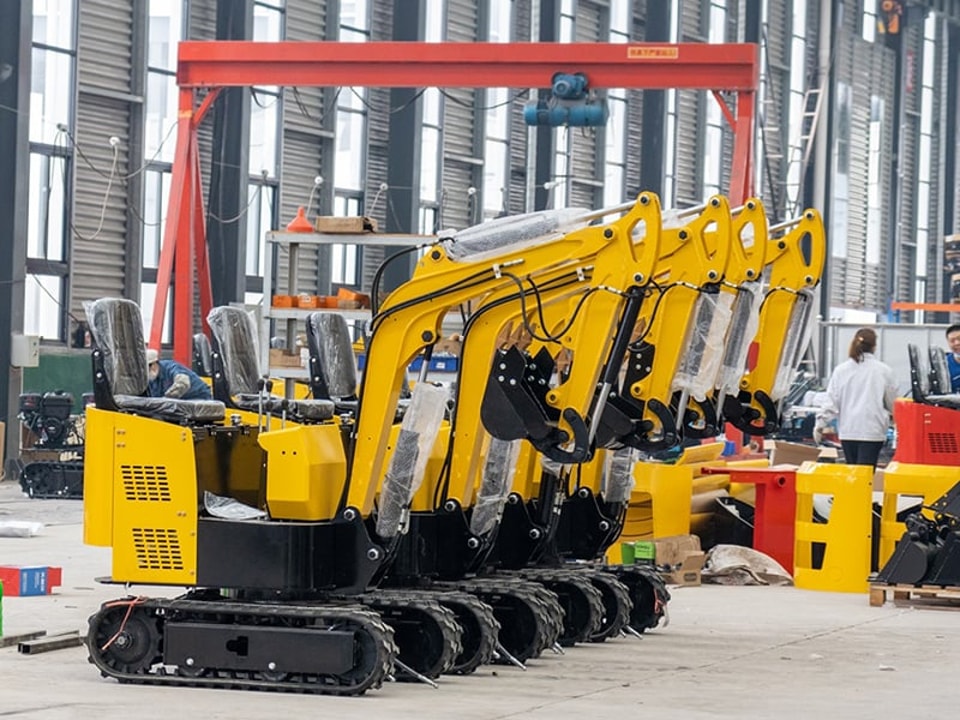
Suitable models for transporting mini excavators include flatbed trucks,low-bed trucks and trailers,which have the characteristics of strong carrying capacity,good stability and easy operation. 1.Mini excavator transportation method Mini excavators are generally transported by road.Depending on the distance and road conditions,you can choose to drive yourself or use a transport vehicle for transportation.The choice of transport vehicle needs to be determined according to the weight,size and model of the mini excavator to ensure the safety and stability of transportation. 2.Selection of models suitable for transporting mini excavators 1.Flatbed truck:Flatbed truck is one of the most common mini excavator transportation vehicles.There is no fence behind it,which is convenient for loading and unloading.It also has the characteristics of strong carrying capacity and good stability.In the process of transporting mini excavators,you need to pay attention to the stability of the excavator and choose a mud shovel board or rack that can fix the excavator. 2.Low-bed truck:Compared with flatbed trucks,low-bed trucks have a lower body height,which is convenient for loading and unloading,and can also pass through height-restricted sections more conveniently.Low-bed trucks have a relatively strong carrying capacity and are suitable for transporting larger mini excavators. 3.Trailer:Trailer is also a way to transport micro excavators.Its carrying capacity is relatively strong.In the process of transporting micro excavators,it is necessary to pay attention to the speed and driving route of the trailer to ensure the safety and stability of transportation. 3.Summary As an important construction machinery,the correct transportation method and vehicle model selection of micro excavators are crucial to ensure the smooth progress of the project and the safe use of equipment.In the process of selecting the transportation model,it is necessary to consider the model and size of the excavator,and at the same time pay attention to the safety,stability and ease of operation of the vehicle to ensure the smooth progress of transportation.
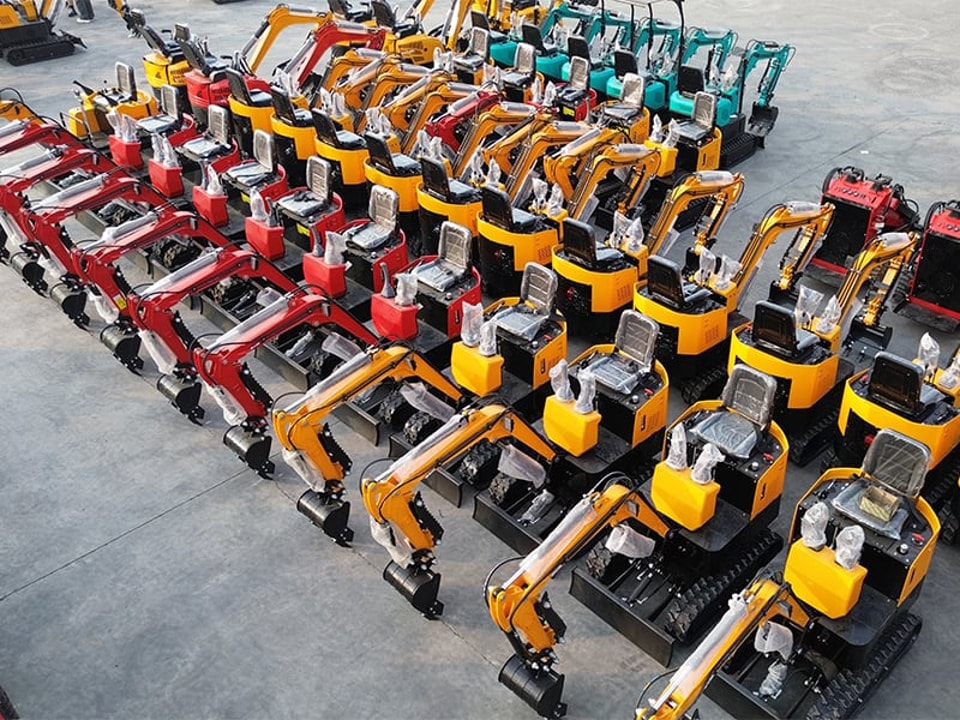
Can a half-ton truck pull a small excavator?Half-ton trucks can pull small excavators.Half-ton trucks,especially front dump trucks,are widely used in construction,agriculture,water conservancy,road construction,mining and other fields to transport a variety of bulk materials such as concrete,sand,earthwork,coal,ore,etc.These vehicles are equipped with a"bucket"-shaped container on the body,which can be flipped to facilitate unloading and is suitable for short-distance transportation.Therefore,half-ton trucks are fully capable of carrying small excavators for transportation. Small excavators play an important role in the construction and engineering fields,especially when tasks such as foundation excavation and earthwork are required.Due to their relatively small size and weight,they are very suitable for transportation using half-ton trucks.In addition,there are other related equipment such as four-wheel vehicle-mounted excavators and agricultural excavators and cranes.Although these equipment have a large loading capacity,they are also feasible to use half-ton trucks for transportation in specific environments,such as mountainous areas. In summary,half-ton trucks are not only able to pull small excavators,but also in some cases,such as short-distance transportation or in specific geographical environments,using half-ton trucks for transportation is a practical and feasible option.

Autumn October, red flags, the whole world celebrate, a total of birthday, Hightop group with all employees wish the great motherland prosperity, national prosperity and peac
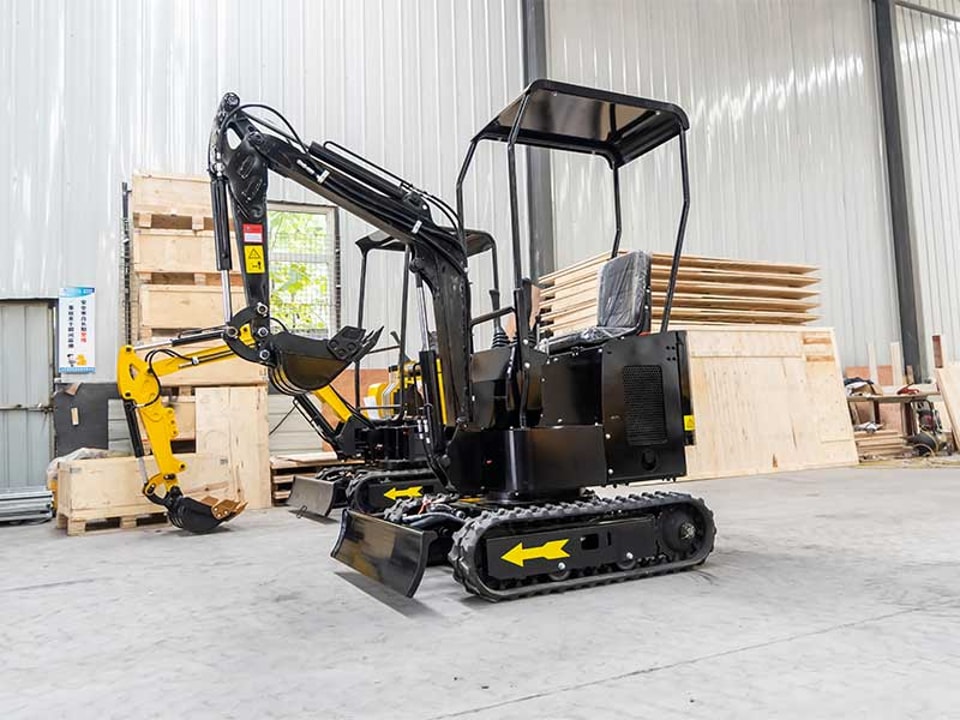
How to Dig Trenches with a Small Excavator – A Practical Guide Digging trenches with a small excavator isn't complicated, but doing it right takes a bit of planning. Here's a straightforward guide on how to get the job done efficiently – from the first mark to the final pass. 1. Mark Your Line Before You Start Before you even start the engine, mark where the trench needs to go. This is the single most important step for digging a straight trench. On most job sites, workers use lime powder or spray paint to draw a straight line along the planned trench route[reference:1]. Once the line is down, position the excavator so its center line aligns with the marked line. The center tooth of the bucket should also line up with that mark[reference:2]. This gives you a visual reference throughout the dig and helps prevent the trench from veering off course. Why this matters A crooked trench wastes time and material. If you're laying pipe or conduit, you'll have to dig extra to straighten it out – or worse, start over. Taking five minutes to mark the line properly saves you hours of fixing mistakes later. 2. Choose the Right Bucket for the Job Not all buckets are the same. For most trenching work, a narrow digging bucket (typically 12 to 24 inches wide) is the best choice[reference:3]. It cuts a clean, straight trench without taking out more dirt than necessary. If you're digging a long, continuous trench – say, for water lines or electrical conduit – a dedicated trencher attachment might be a better option. Trenchers are narrower and cut faster, especially in hard or compacted soil[reference:4]. What about wider trenches? For trenches wider than the bucket itself, you'll need to make multiple passes. A common technique is to dig along both sides first, then clean out the middle[reference:5]. This keeps the trench walls clean and reduces the chance of collapse. 3. Dig Layer by Layer – Don't Rush It One of the most common mistakes operators make is trying to dig to full depth in a single pass. This puts unnecessary strain on the machine and makes it harder to control the bucket[reference:6]. Instead, work in layers. Start by skimming off the top layer of soil along your marked line. Then go back and dig the next layer. Keep repeating until you reach the required depth[reference:7]. How deep per pass? As a rough rule, take about 20-30cm (8-12 inches) per pass in normal soil. In hard or rocky ground, take even less. The goal is smooth, controlled digging – not brute force. 4. Adjust for Soil Type and Trench Depth The way you dig should change depending on what you're digging through and how deep you're going. Sandy or loose soil – Trench walls are more likely to collapse. You may need to widen the top of the trench or use trench shields for safety[reference:8]. Clay or hard-packed soil – Takes more effort to dig. Take shallower passes and let the machine do the work – don't force it. Rocky ground – Avoid using the bucket to pry rocks out directly. Break them up with a hydraulic breaker first, then remove the pieces[reference:9]. This protects both the machine and the bucket. Also pay attention to the slope of the trench bottom. If you're laying water pipes, the bottom needs a slight slope for drainage[reference:10]. If you're digging a foundation trench, the bottom needs to be level[reference:11]. Know what the trench is for before you start. 5. Keep the Slope Consistent The walls of the trench need to maintain a consistent slope from top to bottom. This is what prevents the trench from collapsing[reference:12]. For a V-shaped trench (narrow at the bottom, wider at the top), the slope should stay the same all the way along. If the soil is loose, you'll need a wider slope. If it's firm clay, you can get away with a steeper slope[reference:13]. A quick check As you dig, stop occasionally and look back along the trench. Check that the walls are consistent and the bottom is at the right depth. It's easier to correct a small deviation early than to fix a big one at the end. 6. Position the Machine Correctly Where you park the excavator matters as much as how you dig. For most straight trenches, position the machine so the tracks are parallel to the trench line[reference:14]. This gives you the best reach and visibility. If space is tight – say, you're working between buildings or near a fence – you may need to angle the machine differently. In those cases, work in shorter sections and reposition more often[reference:15]. It's slower, but it's better than damaging the machine or the surrounding structure. 7. Plan Where the Spoil Goes You're going to move a lot of dirt. Plan ahead where you're going to put it. For most jobs, pile the spoil on one side of the trench – the side opposite where you need to walk or work[reference:16]. Keep the pile at least a couple of feet back from the trench edge to reduce the risk of collapse[reference:17]. If you're digging a deep trench, don't try to pile all the dirt in one place. Use the machine's reach to create a primary pile and a secondary pile further out[reference:18]. This keeps the work area clear and makes backfilling easier. 8. Common Mistakes to Avoid Digging too deep too fast – Strains the machine and makes the trench crooked. Go layer by layer. Not marking the line – You'll end up with a wavy trench that's hard to fix. Using the wrong bucket – A wide bucket for a narrow trench means extra work and wasted time. Forgetting about underground utilities – Always check for buried pipes, cables, or gas lines before you start digging[reference:19]. Ignoring trench safety – Keep people and equipment away from the trench edge. If it's deeper than 1.5 meters, consider using trench boxes or shoring[reference:20]. 9. Trenching Checklist Mark the trench line with lime or spray paint Check for underground utilities Choose the right bucket for the job Position the excavator parallel to the trench Align the bucket center tooth with the marked line Dig in layers – 20-30cm per pass Keep the slope consistent Pile spoil safely away from the trench edge Check depth and alignment regularly Frequently Asked Questions How do you dig a straight trench with a small excavator? Mark a straight line with lime or spray paint. Align the excavator's center line with that mark, and keep the bucket's center tooth on the line as you dig. Go layer by layer instead of trying to reach full depth in one pass. What bucket should I use for trenching? A narrow digging bucket (typically 12-24 inches wide) works best for most trenching jobs. For long continuous trenches, a dedicated trencher attachment is faster and cuts cleaner walls. How deep can a small excavator dig a trench? A 1-1.5 ton mini excavator can typically dig down to about 1.5-1.7 meters. The actual depth depends on the machine's arm length and the soil conditions. What's the most common mistake when trenching with a mini excavator? Trying to dig too deep in one pass. This puts stress on the machine and makes it harder to keep the trench straight. Take multiple shallow passes instead. Do I need a special bucket for rocky soil? Not necessarily, but you should avoid using the bucket to pry rocks out directly. Use a hydraulic breaker to break up large rocks first, then remove the pieces with the bucket. This protects the bucket teeth and the machine's hydraulic system. Need a Small Excavator for Your Trenching Job? If you're in the market for a mini excavator, we offer a range of models suited for trenching and other digging work. Browse our mini excavator lineup or contact us with your project requirements. 📧 Email: info009@hightopgroup.com📞 WhatsApp: +86 181 6205 2962
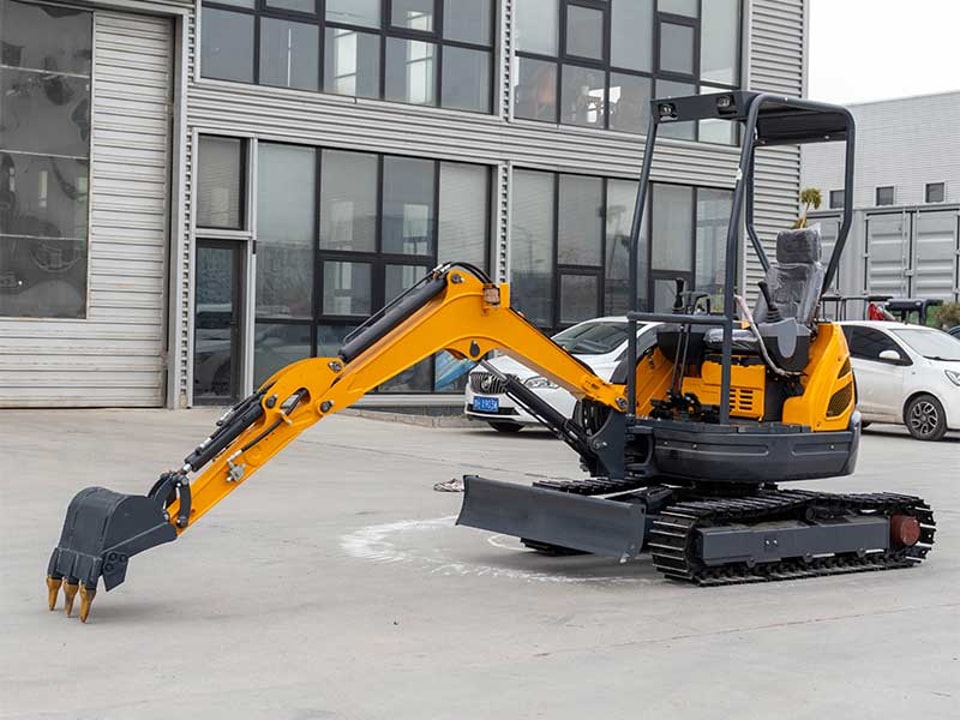
Nowadays, mini and micro excavators have become smarter and smarter. Countryside renovation, greening and road construction, and orchard planting are all inseparable from mini excavators. With the hot sale of mini excavators, many small manufacturers are also competing to buy inferior parts everywhere with low prices, hoping to get a share of the pie. Many users buy mini excavators, only see the low price of the micro excavator, but did not expect to start problems before making money, many users regret. Use mini excavators to save labor costs. When choosing small and micro excavators, just remember the following points, making money will be a natural thing. 1. Vehicle compatibility must be good Many people are concerned about whether the engine is imported or domestic. In fact, this is not too important. Today, the technology of domestic engines is very mature. Whether the main components are compatible and can play a higher performance is the key. Nowadays, the products of many small manufacturers have captured the psychology of users, and they are obsessed with pursuing high configurations, but compatibility cannot be debugged. Incompatible configuration not only greatly reduces the performance of the vehicle, but also shortens the service life of each component. 2. The quality of the manufacturer's after-sales service can not be ignored As a construction machine, small mini excavator wearing parts replacement and maintenance should not be underestimated, but also can be directly related to the user's economic income. Therefore, when choosing a machine, parts are easy to buy? Is the manufacturer's after-sales service timely? This should be investigated before buying the machine. 3. Applicability of the model Most people can take this into account. It is mainly for customer groups who have just entered the industry. Models should be selected according to the actual working conditions in the future. In the plains, the geology is stable, which is very suitable for various operations of wheeled excavators. However, if it is mountainous or hilly terrain, the crawler model should be selected. Of course, there are many factors affecting the choice of model, such as the size of the project and whether the working place is fixed or not. By choosing a mini excavator through the above three points, you can make you happy to buy the excavator, feel free to use it, and feel comfortable after using it. The price of mini excavator is also the most concerned issue for users. Do more looking, compare and ask more questions to ensure that your own interests are maximized.

The moon is very bright at the fifteenth day of the month, and the love is even stronger at the Mid-Autumn Festival; the Mid-Autumn Moon is the most round in a year, and the osmanthus rabbit is accompanied by Chang'e; the warmest thing on earth is the reunion, and we are looking forward to the night of the reunion. The Mid-Autumn Festival of 2024 is coming on schedule, in this wonderful season which symbolizes reunion and harvest, Shandong Hightop Group, as always, puts employee care in the first place and prepares rich festival gifts for all employees, so that every employee can feel the warmth of home, in order to celebrate the coming Mid-Autumn Festival and send the most sincere festival greetings to every hard-working family member of Hightop. A blessed gift carrying the care and greetings of the group was passed to everyone, and the heavy holiday gifts brought laughter and a full sense of happiness to everyone, who will devote themselves to their future work with higher enthusiasm and motivation. Some employees said: “The company brings us surprises on traditional festivals every year, and this kind of care makes us feel very warm and strengthens our determination to contribute to the development of the company. As the Mid-Autumn Festival is approaching, we sincerely wish every member of Hightop Group family: Happy Mid-Autumn Festival, happy family, good health and all the best!

Enquiry about