Product Selection
Shipments, trade shows and practical guides for choosing, running and maintaining compact equipment.
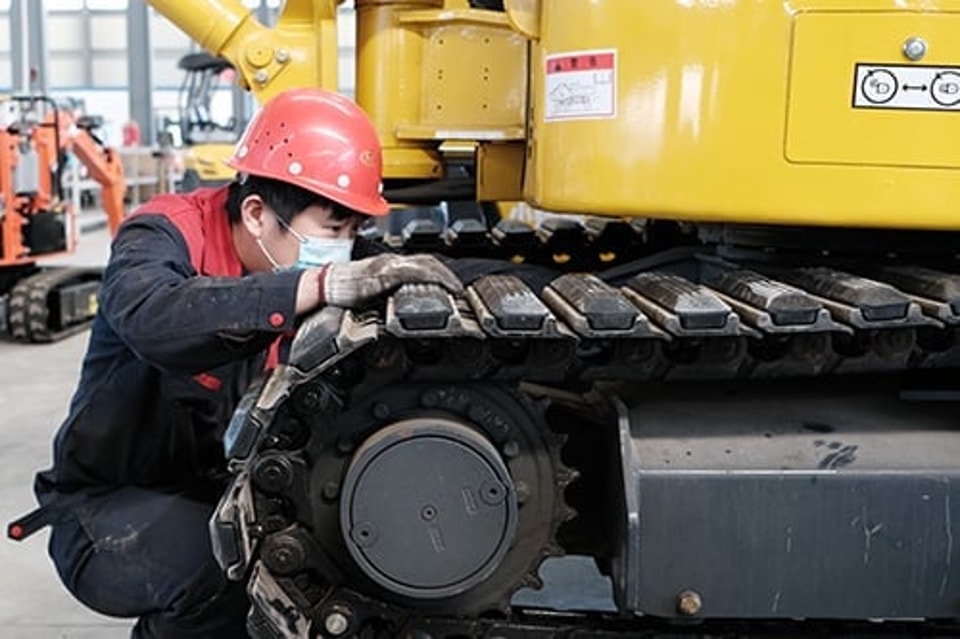
Does the dual-purpose excavator still need maintenance? I think many drivers will say that they have specialized excavator repairs and maintenance. If they are damaged, you can take a break. However, it must be pointed out that the excavator can only avoid frequent failures in the wheel-track dual-purpose excavator. Daily maintenance of excavators In order to prevent the wheel and track dual-purpose excavator from malfunctioning, extra care must be taken in the daily maintenance of the excavator. The daily maintenance of the excavator includes: Check, clean or replace the air filter. Clean the inside of the cooling system. Check and tighten the track shoe bolts. Check and adjust the tension behind the track. Check the air inlet heater and replace the teeth. Adjust the bucket clearance. Check the level of cleaning fluid on the front window. Check and adjust the air conditioner, and clean the floor inside the cab. Replace the circuit breaker filter (optional). Note: When cleaning the inside of the cooling system, after the engine is completely cooled down, before releasing the water, slowly loosen the water inlet cap to release the internal pressure of the water tank. Do not clean the engine during operation. Rotating the fan at high speed is dangerous. When cleaning or replacing the coolant, park the machine on a flat surface. At the same time, you need to check the coolant level (add water) before starting the engine. Check the engine oil level, add oil, check the fuel oil level (add oil), check the hydraulic oil level (add hydraulic oil), check whether the air filter is blocked, check the wire, check whether the horn is normal, check the bucket lubrication, check Whether there is water and sediment in the water separation container. Excavators encounter many failures in their daily work. Daily maintenance of excavators is very important to reduce the occurrence of failures. Only the double guarantee of maintenance and maintenance can improve the operation of the excavator. Therefore, it is necessary to carry out routine maintenance on the dual-purpose excavator. If you encounter minor problems every time, please consult a professional maintenance supervisor. There are many worthless losses.
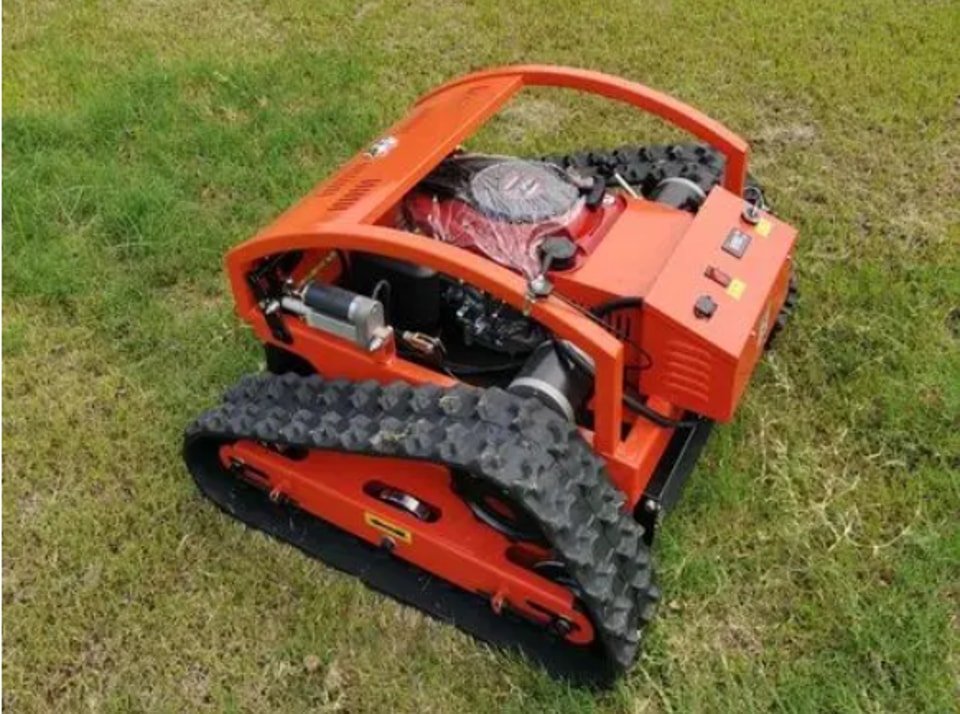
Remote control mowing, its full name is also called multi-function remote control orchard management machine. It achieves excellent functional value in complex terrain, such as remote control of mowing and shredding. It is equipped with a transport bucket for field transportation, and it is equipped with an air delivery spray kit to achieve air delivery. Drug-fighting function. This remote control lawn mower is equipped with a 192 air-cooled engine, and the actual power is about 13 horsepower, which can realize fast and slow work with constant power. At the same time, the bottom mowing device adopts a strictly designed patented technology, and under the premise of realizing the mowing function, it also has the function of shredding grass, so that the weeds in the work area can be more easily cleaned up. Crawlers replace the working wheels, so that the remote control lawn mower has the ability to cross ravines and depressions, which effectively reduces the probability that the user is in danger due to weeds covering the road and not being able to see clearly. The top of the remote control lawn mower is reserved for the installation interface of the air delivery sprayer, which is used to carry the patented air delivery spraying equipment independently developed and designed by our factory to realize the function of remote control air delivery spraying. At the same time, a transport bucket can be installed to achieve the effect of mechanized field transportation. The above are the main components of the remote control lawn mower. If you have any other questions, please contact us. Welcome new and old customers to inquire.
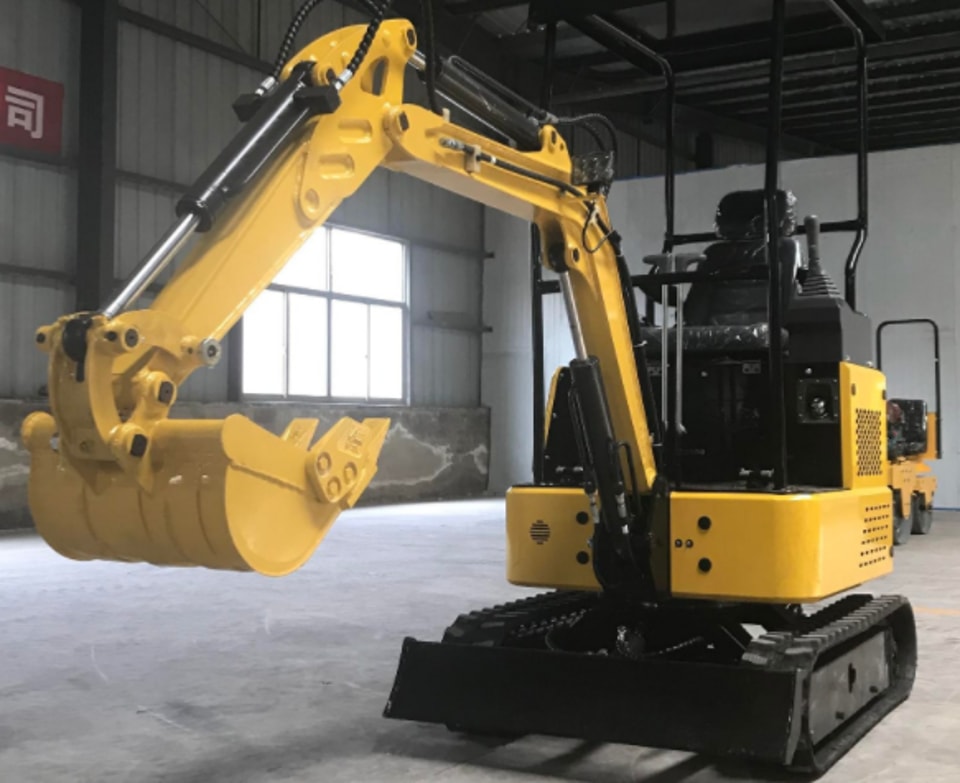
Small excavators will be more competitive with high cost performance and economic use. At the same time, economically developed cities have higher labor costs, replacing labor with machinery, improving labor efficiency, and adding small excavators to be more suitable for use in places with limited space, which also indicates that the era of rapid development of small excavators is coming. The market prospect is attractive and the potential is huge. Small excavators are low in price, light in weight, flexible in operation, and convenient in maintenance and repair. They are very suitable for urban construction, various pipeline excavation, and public facility construction. The compact design of the small excavator enables it to work in environments where large excavators cannot complete the construction. Secondly, small excavators have versatility and distinctive operating characteristics. In addition, cumbersome procedures such as consignment are also omitted in the work space. Small excavators can be said to be the mainstream of the excavation machinery industry now. Many owners of large vehicles are deeply impressed. It is difficult to maintain a car, difficult to pay back, and no money is seen throughout the year, but small excavators are not. Most of them are small projects. Generally speaking, they don’t hold down their money, they are strong after their work, with small investment and a lot of money. They can be said to be a good helper for rural people to get rich. Today's analysis of small excavators is here. There are also articles about small excavators to share before, and you can also read them. There will be more sharing and summary of knowledge about excavators in the future. Welcome everyone to provide valuable comments. Finally, I wish everyone a prosperous business and happy every day.
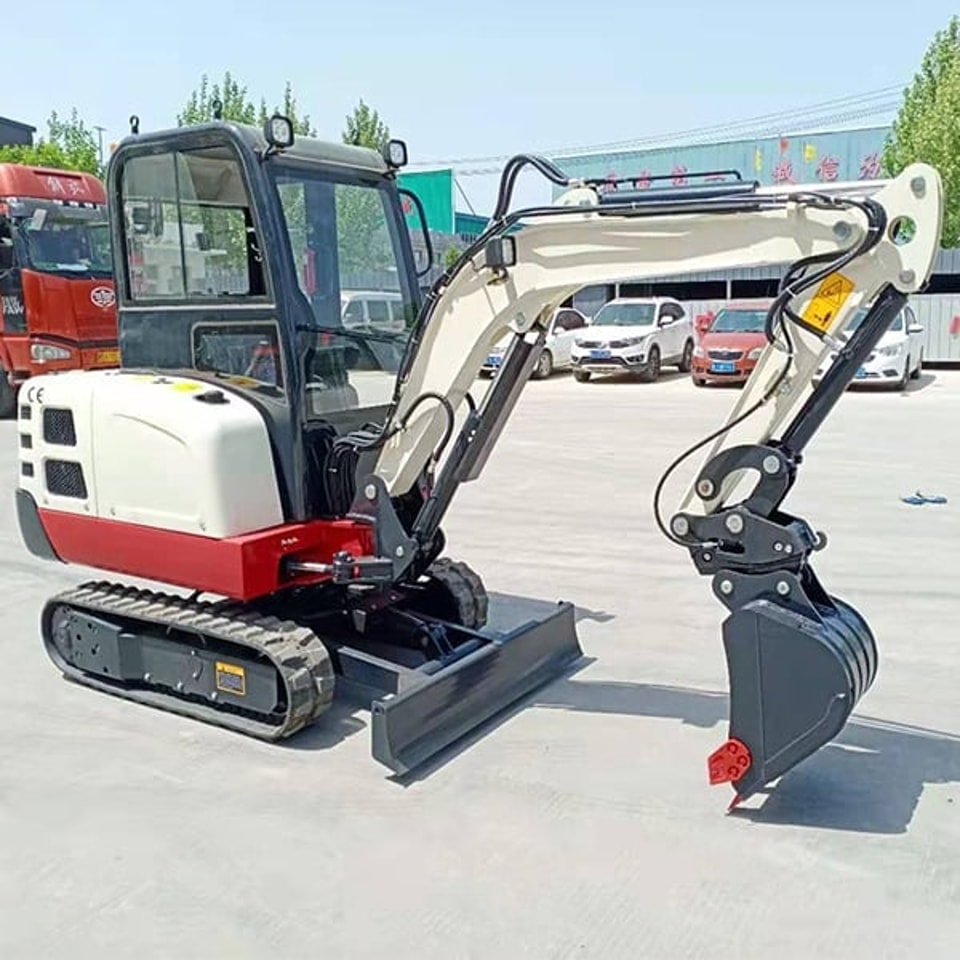
Small excavators are indispensable in mining, urban construction, and road construction. When it comes to building roads, everyone thinks of small excavators. Whether you are building highways, tunnels, or mining construction sites, you can see small excavators. Today, the editor will talk to you about the skills of small excavators to build roads on the construction site. On the construction site, road repairing is a very important job, and it also requires certain skills, especially for roads with slopes. If the slope is too large, the car will not be able to get up. If the slope is too small, the slope will be too high. long. How can we build a road that is neither very steep nor too long? 1. First observe the distance between the top of the slope and the low end of the slope Before starting to repair the slope, first observe the span and distance of the upper and lower ends of the slope to be repaired to determine the size of the slope to be repaired. If an up and down road is opened directly from a step, the length and size of the slope must be determined by the height of the step. The higher the height of the step, the longer the slope will be (of course, it must be based on the actual environment of the site. Determine the length of the slope). 2. The prototype of using a small excavator to repair the way out After deciding on the slope of the road to be repaired, start digging with a small excavator. Start by layering from the upper end of the slope and gather it down, so that the soil at the upper end of the slope can be gathered to the bottom to elevate the road below and reduce the slope of the entire road. When you gather from the top to almost half of the slope, use a bucket to flatten the soil gathered below, and the general outline of the entire road surface has been formed. 3. Leveling of the ramp When the slope is roughly formed, we must level the road surface of the ramp. Still from the upper end of the slope, pat down the raised part with a bucket, and line up the recessed part (of course, experienced operators can usually form it at once). If there is only a small amount of loose soil and rock on the ground, it needs to be processed and leveled. , We can use a small excavator to rotate the soil and rock. It should be noted that the rotating force will be relatively small. When it encounters hard soil or a lot of soil, it will not be “swept”. At this time, there will be more The combination of compound movements sweeps away the soil. When the slewing force is insufficient and the bucket is "stuck", we can use the forearm to retract back and forth and the small opening and closing of the bucket to reduce the resistance of the bucket, thereby "sweeping" the hard soil away. In this way, when the road is relatively flat, the crawler of a small excavator is used to walk back and forth on the entire road for a few laps, and the road is compacted with the crawler, so that a ramp is OK. Repairing roads on construction sites is a common operation for small excavators, but to repair the roads, it is necessary to rely on skilled operation skills and keen observation. Working conditions are ever-changing, and only when we have mastered more operating skills can we cope with various complex working conditions.
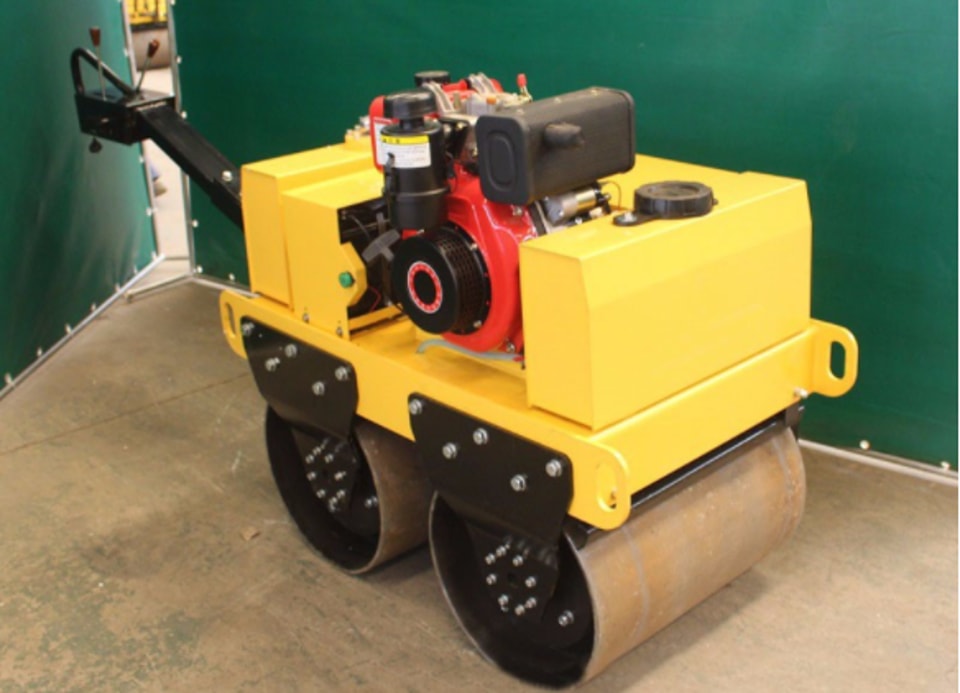
Full hydraulic compact rollers are compact and convenient, easy to operate, easy to learn, and flexible, so the operating radius is small, and construction can be carried out in narrow sites, such as trench backfill; because all hydraulic compact rollers generally use international and domestic well-known engines. Therefore, the performance of the roller is relatively stable, the power is strong, the fuel consumption is low, and the performance is relatively superior. Fully hydraulic compact rollers are mainly used for ditch backfilling, road and sports ground paving and other operations, with a wide range of applications. The whole hydraulic compact roller has a compact structure, small size, easy transportation and high work efficiency. It can be used with large rollers. At the same time, the operating handle can be adjusted to provide a comfortable operating environment for the staff and facilitate transportation or storage. Walk-behind rollers have many applications in the construction industry. The use of small-sized rollers requires common sense of operation and correct operation. Today, the editor summarizes some common-sense issues that operators of walk-behind rollers should understand. Take a look if you need them. 1. Operators of hand-supported rollers must be certified to work. Non-professional drivers are strictly forbidden to work. Do not leave the post without authorization during work, and do not operate machinery that does not conform to the operation certificate. 2. Operators are strictly forbidden to work after drinking, and it is strictly forbidden to hand over the hand-held roller to a person without a license to operate the machine. 3. The operator must strictly implement the pre-work inspection system and pay attention to observation during work and the inspection and maintenance system after work in accordance with the provisions of the machine manual. 4. Do not operate with overload or malfunction. If there is any problem during the operation of the walk-behind roller, it should be shut down immediately for inspection. 5. When the walk-behind roller is parked at the construction site, the parking place should be selected and the parking brake should be pulled on. When parking on a ramp, use triangle wood or stones to hold the wheel against the wheel. Special personnel should be supervised at night; 6. During the operation period, non-construction personnel are strictly prohibited from entering the construction area, and construction personnel are strictly prohibited from chasing and making trouble when entering the construction site.
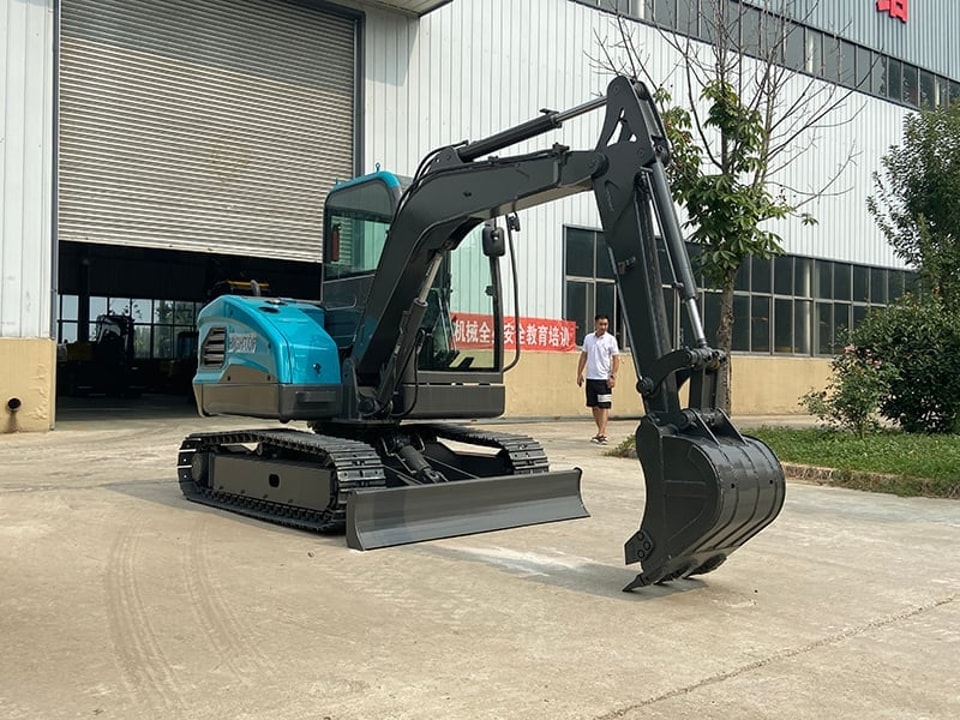
The repair master arrived at the site based on the defect phenomenon and the relevant introduction of the hydraulic operating principle of the machine, and the preliminary recognition of the defect and the analysis of the reasons are as follows: 1. The machine has planned and added regeneration function in the forearm retracting oil circuit. A brief introduction to the benefits of the regeneration function is to prevent the forearm cylinder from extending too fast under the effect of the forearm's own weight when the forearm is retracted. Cavitation in the cylinder constitutes an adverse effect. On the other hand, the continuous phenomenon of the forearm and the retraction speed of the traveling forearm must be avoided. 2. The key point is that this function is completed by the one-way valve in the ARM1 spool and the arm regeneration valve. With this visible defect, we also need to open the key around the two parts. 3. Return to the operating principle of the machine. When the owner chooses the excavation construction method, the regeneration valve spool is in the saving position and binds the oil return of the rod cavity of the cylinder. When the oil pressure of the rod cavity is higher than the oil pressure of the rodless cavity, the one-way valve in the ARM1 spool opens, so that the return oil from the rod cavity returns to the rodless cavity to end the regeneration function. 4. Therefore, after the above introduction, we will easily understand that if the regeneration valve spool cannot be in the saving position or the one-way valve in the ARM1 spool cannot be opened smoothly, the regeneration function in the arm circuit cannot be ended. Then form the forearm to produce continuity in a straight position. Maintenance process of small excavator After analyzing based on the above working principle, the engineer inspected the regeneration valve spool and the pilot oil circuit, and found no abnormal defects. The cause can be cleaned up immediately. When the repairer checked the check valve in the ARM1 spool, he found that the saving hole at the front end of the check valve was blocked by foreign matter, which caused the check valve to fail to open, which eventually caused this defect. Small excavator treatment method Since the defect of the saving hole was only caused by foreign matter blocking, and there were no other abnormal wear and other conditions, it was only necessary to completely clean the saving hole and then test the machine from the beginning. It was found that the continuous phenomenon of retracting the forearm did not reappear, indicating that the defect has been cleared.
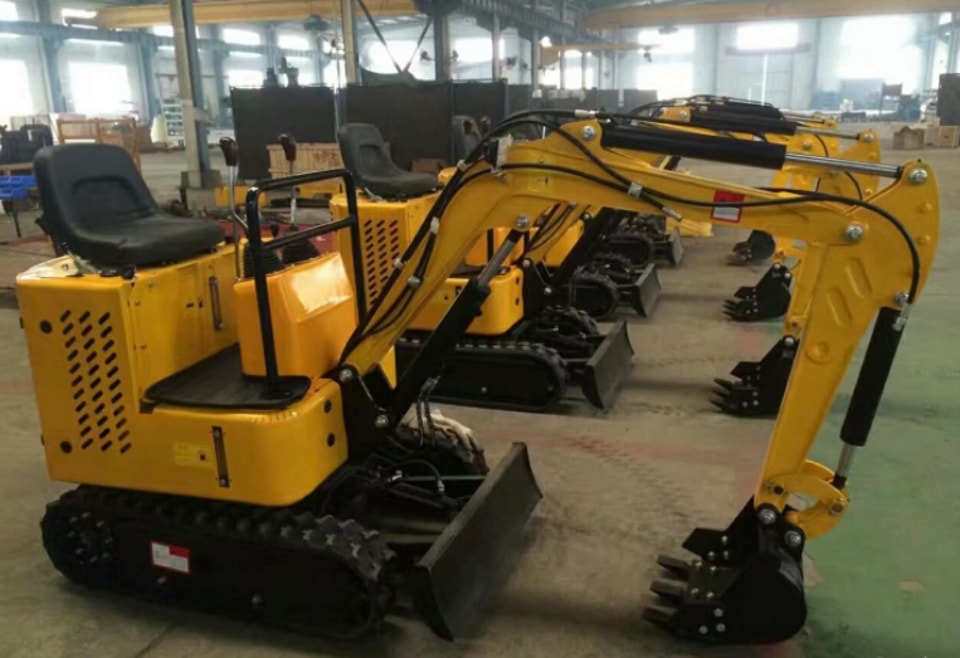
Most operators know how to dig, trench, and grade with a mini excavator. But lifting – hoisting pipes, equipment, or materials – is a different skill. The machine is working in a lever state, and the margin for error is smaller. Here are the five rules that separate safe lifting from a rollover. 1. Use the Bucket Hook – Not the Teeth Every mini excavator bucket has a hook on the back. That hook is there for a reason. When you're lifting a load that needs to go up – pipes onto a trailer, equipment into a building – use the hook. The bucket teeth are for digging, not lifting. A rope or sling placed on the teeth can slip off during the lift, especially when the bucket tilts or the load shifts. The hook keeps the sling secure, even at full extension. When to use the teeth instead: If the load is on the ground right next to the machine and you're just sliding it a short distance, the teeth can work. But for any lift that goes higher than knee level, switch to the hook. Check the hook condition before every lift – a cracked or worn hook is a failure waiting to happen. 2. Level the Machine – Tipping Starts with a Tilt An excavator lifting on uneven ground is an excavator that's already halfway to tipping. The machine needs a solid, level surface to stay stable under load. Before you start, check the ground. If you're on a slope, take a minute to dig out a level spot for the tracks. It's a few extra minutes of work, and it's the cheapest insurance against a rollover. Also pay attention to track orientation. The safest lift happens when the load is directly in line with the tracks – not perpendicular to them. The further the load is from the track centerline, the higher the risk of tipping. If you need to lift to the side, keep the load as low and as close to the machine as possible. 3. Know the Lever – The Boom Comes First The order of operations matters. When you're ready to lift, raise the boom first. Get the boom into position before you move the arm or bucket. Once the boom is set, use the arm and bucket to fine-tune the load position. The arm provides reach; the bucket provides tilt and final positioning. But the boom does the heavy lifting. If you try to lift with the arm before the boom is in place, you're putting stress on the wrong part of the machine. Think of it this way: the boom is your shoulder, the arm is your elbow, and the bucket is your wrist. You wouldn't try to lift a heavy box with just your wrist – you use your shoulder first. Same principle applies here. 4. Keep the Load Low – Height Adds Risk Every centimeter you raise a load adds risk. The higher the load, the more leverage it has against the machine's center of gravity. A load that's stable at waist height becomes unstable at shoulder height. Only lift as high as necessary. If you're loading a trailer, raise the load just enough to clear the trailer sides. If you're placing materials, keep them as low as possible during the swing. The extra few seconds it takes to keep the load low are worth the safety margin. 5. Know Your Limits – Distance Reduces Capacity Every mini excavator has a rated lifting capacity – but that rating assumes the load is close to the machine. The further the load extends from the center of gravity, the less the machine can safely lift. Here's a rough guide for a 1.5-2 ton mini excavator: Close to the machine (within 1m): Close to rated capacity Mid-reach (2-3m out): Reduced by 30-40% Full reach (arm extended): Reduced by 50% or more If you're unsure, test the lift before committing. Raise the load just a few centimeters off the ground and check the machine's stability. If the tracks start to lift or the machine feels unstable, reposition closer to the load or reduce the weight. What to Do If Something Goes Wrong If the machine starts to tip or the load becomes unstable during a lift, don't freeze. Lower the boom immediately – not slowly, not carefully, but immediately. Let the load drop if you have to. A dropped load can be replaced. A rolled machine cannot. The priority in any lift is: operator safety first, machine safety second, load safety third. Never try to save a load at the expense of your own safety or the machine's stability. Frequently Asked Questions Can I lift with a mini excavator without a bucket hook? Technically yes, but it's not recommended. Without a hook, you're limited to using the bucket teeth or clamping the load between the bucket and arm – both methods are less secure and increase the risk of the load slipping. If your machine doesn't have a hook, consider installing one. How much weight can a mini excavator lift? That depends on the model and the lift radius. A 1.5-2 ton mini excavator can typically lift 1,500-2,000 kg close to the machine, but that drops to 500-800 kg at full reach. Always check your machine's lift chart before hoisting. What's the safest position for lifting with a mini excavator? Directly in front of the machine, with the load aligned with the track centerline, on level ground, with the load as close to the machine as possible. Avoid lifting to the side or on slopes. Do I need a spotter for lifting operations? Yes. A spotter with clear hand signals or a radio keeps the operator aware of the load position, overhead hazards, and ground conditions. Never lift without a spotter – especially on busy job sites. What should I check before every lift? Check the bucket hook for cracks or wear. Check the sling or rope for fraying or damage. Check the ground for levelness. Check the load weight against the machine's lift capacity. And check the lift path for overhead lines or obstacles.
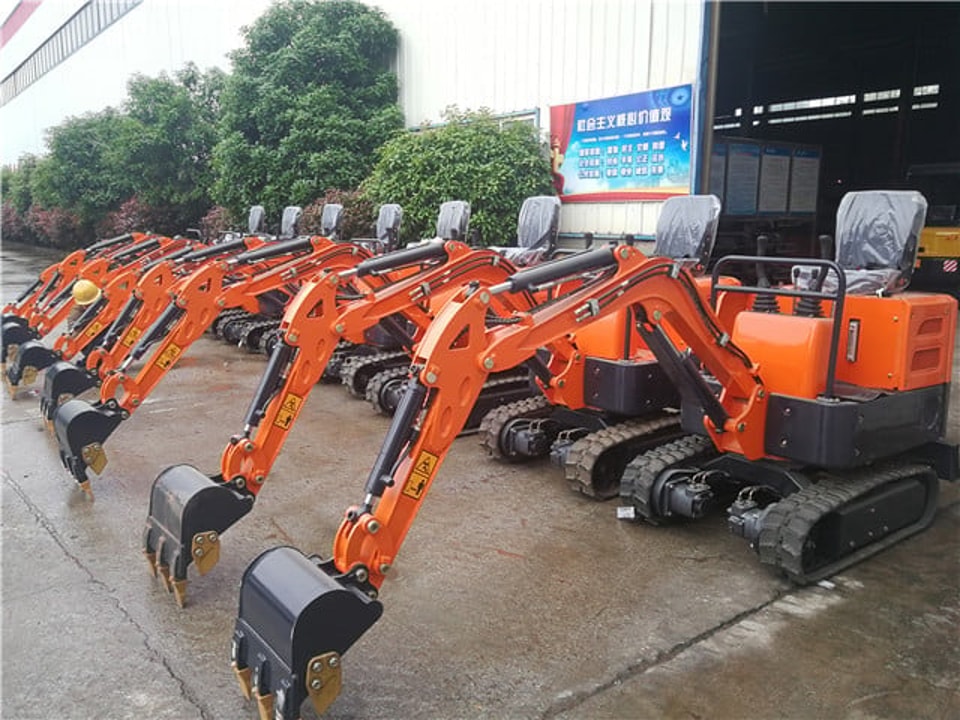
Whether it is the construction of farmland and water conservancy, or the construction of cities and towns, domestic demand uses construction machinery. The emergence of internal construction machinery is as high as possible, even if the selection of miniature excavators, small bulldozers and heavy excavators, it will have the advantage of sprinkling. After passing through the comparison, you will be aware of it. Why do people pick and choose small excavators? Nowadays, the elegant young people refer to cities that choose to go out to work. Therefore, there is a lack of deterministic labor in mountainous areas. Compared with prefectures and cities, these fortifications in rural areas seem to be relatively extensive, and the situation is as small, so choose a large-scale excavation. This is also the least allowable opportunity, and today’s small villages have taken advantage of the high-speed pioneering and enterprising stage, and the accumulation of strong labor is gradually increasing. Therefore, if you want to quickly upgrade and replace the money, you should choose one. A small excavator. When you pick up the investment pocket excavator, you can clearly know that the money you take will be more than usual when you go out to work. This is also a good pick for the dealer. The old and new rural areas urgently need to use surplus machinery and equipment in the construction process, and the price of these machinery and equipment is relatively high, so most of the farmers and lovers are weak and bear the burden. So at this time, instead of choosing materials, imagine small excavators, small excavators, and miniature electric shovel. The items needed for these excavators are not very high. They seem to be between 100,000 yuan and 200,000 yuan anyway, and they can also be borrowed in installments, so this can meet the needs of peasants' lovers. When seeking common ground and seeking differences, it is not easy to worry about problems arising at the historic moment.
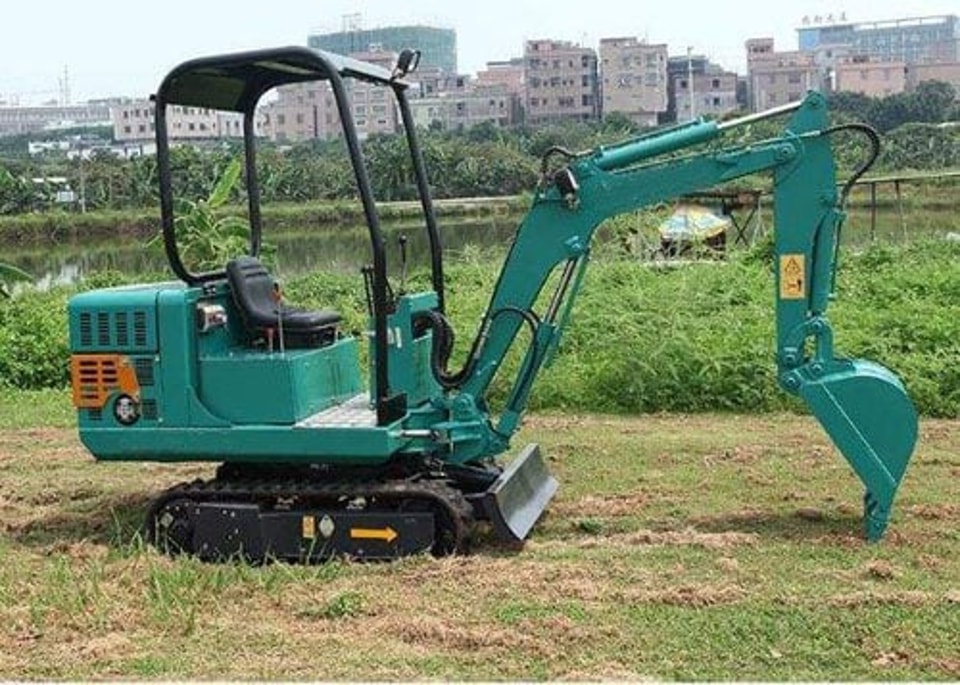
Experts say that in general, small excavator products will not cause the normal repair of a fire. In special circumstances, long-term negligence, maintenance and repair are not timely. Driver's improper operation, unauthorized electrical system correction , Man-made arson and other causes are the main causes of "spontaneous" or other fire incidents. According to the statistics of insurance companies, small excavator fire incidents mostly occur near diesel fuel tanks or engines, as well as oil pipe leakage caused by fire, improper electrical system conversion, short circuit, etc. The percentage of incidents involving improper use of fuses is very high. Although it is possible It is very small, but once it happens, the economic loss of the value of the micro excavator equipment exceeding one million US dollars is very large. Therefore, with regard to this kind of fire incident, prevention and prevention are particularly important. Experts suggest that a better way to prevent spontaneous combustion incidents of small excavators is to inspect and maintain small excavators on time to prevent such problems. First check the engine, hydraulic pressure and The electrical system, see if there is leakage or aging. Clean the engine system in time to ensure that the engine is inside and outside. Others, it is necessary to strengthen self-service operators. Many small excavators are not equipped with fire extinguishers. In the event of an accident, the operator cannot save lives. Equipped with For example, fire-fighting equipment such as dry powder fire extinguishers is inspected once a year at the local fire-fighting equipment store. When going uphill, please note: 1. Check the slope angle to see if it is within the scope of the excavator. Assuming that the slope is too steep, please roll the material from the upper part of the slope to the lower part to reduce the slope. 2. Eradicate large rocks. When climbing on a steep slope, the rocks will also cause the crawler track to slip, which then causes the excavator to move forward. 3. When climbing, please lower the center of gravity of the vehicle as much as possible, extend the arm to the head, and insist on the bottom of the bucket and the slope to be 90 degrees to prevent the bottom of the excavator from sliding into the bottom of the excavator. 4. Sometimes you will encounter a loose arm climbing with the excavator, and the excavator can slide down. For this situation, the weight of the small excavator can be as follows: dig the shovel as deep as possible, press the power, and act as the arm. When you receive the head, do not spread it, let him tilt, small excavators, fireproof materials move down the track, small excavators form a pile behind the track. Don't underestimate this pile of small things, you can excavate The machine will go permanently. When staying at the bottom of the bucket and excavator without sliding down, slowly move the arm to the head and tie it to the front. The deeper the better.

Enquiry about