Product Selection
Shipments, trade shows and practical guides for choosing, running and maintaining compact equipment.
With the widespread application of monitoring systems on small excavators, the requirements for human-machine-information interaction are getting higher and higher. In addition to the functions of the modern small excavator electronic monitoring system, its design rationality, versatility, and ease of operation need to be considered and discussed ingeniously. The relevant technical points need to be processed in detail, otherwise it will be applied In the process, you will find that there are various application problems. A good electronic monitoring system architecture can make it convenient for developers to expand new functions, make it easy for operators to operate, make it easy for maintenance personnel to locate abnormalities and errors, and enable small excavator owners to instantly understand the use of their equipment. Functional requirements of modern monitoring systems Modern monitoring systems generally consist of signal input parts (such as analog signals, switch signals, etc.), signal processing parts, controllers, monitors and control actuators. Due to the harsh working environment, complex working conditions, high maintenance frequency, and inevitable failures of hydraulic small excavators, the monitoring system requires the following functions: (1) Data collection function The system needs to collect the working status signal of the hydraulic small excavator. For example: engine coolant temperature, hydraulic oil humidity, fuel level, air filter alarm switch, battery electric skin, preheating signal, etc. The signal types are mainly analog signal, switch signal, PWM signal, etc. (2) Bus communication function As a part of the electronic control system in mechatronics, the monitoring system needs to interact with the main controller and GPS remote monitoring platform. The main controller and GPS communication module of modern electronic control all adopt the bus control system, and the monitoring system also needs to have the bus communication function. (3) Human-computer interaction function The monitoring system enables the operator to view the working information of the system through the display device. The display device should have a better viewing angle and adjustable brightness, adapt to the needs of different lighting environments, and be able to display alarm indication information. The display interface is beautiful and adaptable. Strong. The displayed interface requires a visually invisible interface refresh process, and the displayed instrument panel requires the pointer to indicate normal. Through the language navigation, the language suitable for the operator can be selected to facilitate the operation of the small excavator. The monitoring system should have a key input function, so that the operator can perform various control operations through the keys, such as enabling the small excavator to switch between high and low speeds, automatic idle speed switching, and parameter calibration. Due to the large size of small excavators, the monitoring system should be equipped with reversing video input and display output, so that the operator can more clearly understand the obstacle information in the non-visible area, and can understand the surrounding environment and increase the safety of operation. (4) The monitoring system has a certain data storage capacity The monitoring system needs to display interface, text and storage working parameters, fault record history information, etc. The storage information needs to be stored in a non-volatile storage medium. The storage structure of the designed monitoring system needs to have: reasonable design, high utilization, and high reliability. (5) Easy to upgrade system software The working site environment of the small liquid-skin excavator is complicated, and sometimes the construction site does not have the conditions for disassembly and assembly of equipment. Modern monitoring systems propose to be able to update remote programs through a remote monitoring platform. If conditions permit, it may also be required to pass an on-site upgrade. The traditional way of upgrading through online programs requires disassembling the equipment, and the way that must be physically connected is not suitable for modern electronic monitoring systems. Therefore, a better system software upgrade method is needed. (6) Fault record and storage, fault display, sound and light alarm, etc. Since the failure of the small hydraulic excavator is inevitable, it is necessary to instruct the operator to carry out the necessary alarm processing by means of fault alarm. The text prompt can directly indicate the fault location, which is convenient for maintenance personnel to eliminate and deal with the corresponding fault. Maintenance personnel can view the related fault source of the fault by reading the historical fault record stored in the memory, and conduct further fault diagnosis and troubleshooting. At the same time, the fault alarm can be uploaded to the remote monitoring platform, and the platform operator can also instantaneously check the working conditions of the small excavator and carry out corresponding fault handling. (7) Enable the small excavator to carry out the first, second and third level locking of the car remotely. When the small hydraulic excavator is used abnormally, the monitoring system determines whether the small excavator is working through the control instructions sent from the monitoring platform, and can perform corresponding Class I, II, and H locks. In this way, the leased vehicles can be further restricted and managed, and the irregular behavior of the small excavator rental market can be restricted in a wider range. (8) Anti-interference ability Since the power supply of the hydraulic small excavator comes from the battery, it is easy to generate transient voltage when starting and stopping the operation. At the same time, electrostatic interference, electromagnetic interference, etc. may also damage the normal operation of the monitoring system. The hardware design of the system must consider electromagnetic interference.
The common causes of crankshaft failure of small excavator diesel engine are: First of all, when the lubrication is not good. A poor diesel lubrication system and the semi-friction connection between the journal and the gasket (that is, the bearing at the cut is not strong) will cause the bearing bush to burn out and often use up the shaft. After the root is removed, the stress will change and friction will occur between the bottom of the crankshaft and the crank arm. Second, the bearing is not working properly. For diesel engines, if the main bearing rotates through the rolling pivot, or the gap is too large and the main bearing shaft is different or too large, that is, the crankshaft, flywheel, radial deflection, and the specific gravity of the diesel itself. In addition to the uniform force on the crankshaft, it also affects the work of each cylinder. Similarly, if the gap of the connecting rod bearing assembly is too large or the alloy falls, the impact load will cause the crankshaft to appear for the first time, thereby increasing the cause of damage. Third, the loosening of the main bearing cap nut is one of the important reasons for the premature failure of the crankshaft, because the crankshaft is lost or loose in the support, and each coaxial bearing hole is coaxially offset. If the aisle after the main bearing nut loosens loosens the forklift axle and the bearing clearance affects the aisle, the diesel engine must be out of tolerance. In other words, the main diary is lost. If a concentric shift occurs and the crankshaft rotates in the housing to the end of the housing hole, the crankshaft load will be different and the crankshaft may be damaged. Fourth, the axial disturbance of the crankshaft is too large. If the clearance along the crankshaft is too large, the main reason is the axial movement of the crankshaft. The crankshaft, which is the thrust bearing of the connecting piece, is located on the 4th side of the main track, and it has a directional clearance when the crankshaft reaches 0.5-0.6 mm or more. As a result, the working load diesel engine and the crank arm having the crank reaction force on the bearing end face become heavier to ensure a certain degree of deflection. Stress concentration can accelerate the cracking process of the crankshaft. The flywheel is moving. Fifth, the loose flywheel bolts will eventually damage the crankshaft assembly, resulting in crankshaft fatigue, loss of dynamic balance and significant loss of inertial force. When the crankshaft and flywheel pass through this matching cone (for example, diesel engine S195), the flywheel is either used as an outer surface, or the crankshaft breaks and gets stuck in the keyway, such as the function of the crankshaft. The coupling area is less than 75%. diesel engine. Sixth, the power is out of balance. When the maintenance is switched to the crankshaft, the iron or iron balance does not meet the unbalance requirements, and the original balance is lost. The crankshaft bearing is easier to manufacture, but the inertial impact force is relatively high. In addition, when repairing the crankshaft, the bearing will deviate from the crank radius, causing strong vibration and overloading of the diesel engine, which will increase the tolerance of the crank arm I and cause the imbalance to exceed the centrifugal force. Long time (ie, rupture) can easily fatigue the crankshaft. Seventh, the crankshaft is not properly grounded. Only the crankshaft, because the crankshaft is the most important factor that affects the crankshaft, crankshaft, connecting rod journal, the rounded corners between the main journal and the crankshaft, and the bending fatigue strength of the crank of the starting arm, so ignore the main journal polishing, please ignore the rounded corners, The shaft journal is coaxial, parallel, crank radius, other repair shoulder and shaft journal surface roughness, as well as the size and shape of the angle between each crank pin. Grinding and non-grinding wheels. Incorrect fillet drilling or right-angle fillet cannot choose the correct fillet. Therefore, the result obtained here is that the crankshaft fillet is prone to stress concentration and strength reduction, and is prone to cracking.
In the process of using small rollers, the failures are actually unexpected, because we have not anticipated that, once the failure occurs, everyone will often be caught off guard and do not know how to deal with it. For example, if the small roller is in use The engine suddenly does not start during driving. Do you know the reason? In fact, when you are driving a small roller, if you do a good job in the run-in period, you can actually reduce the breakdown. To prevent the occurrence of small-sized roller failures, the operation should be regulated during the running-in period. If there are some failures in the use of small rollers, it will cause delays in work. If the engine does not start. The possible reason is: 1. Check the control position to see if the fuel valve is open or not, and turn the valve to open. Close the choke door and turn on the engine switch of the compact roller. 2. Check the fuel. If the fuel is gone, add fuel. It may be that the fuel has deteriorated. In this case, it is necessary to change the fuel. 3. Remove and check the spark plug, clean, adjust the gap or replace the new spark plug. If the spark plug is soaked with fuel, dry it and reinstall it, and move the valve lever to a faster position. No one can guarantee that their own small rollers will not malfunction, so the operators of ordinary small rollers must have a general understanding of the working principles of some related machinery in case of emergency. After leaving the factory, small rollers will normally have a running-in period of about 60 hours (some called the running-in period), which is stipulated by the manufacturing factory based on the technical characteristics of the initial use of construction machinery. The running-in period is an important link to ensure the normal operation of construction machinery, reduce the failure rate, and extend its service life. But at present, some users neglect the extra skill request of the new machine during the running-in period because of the lack of common sense in the use of construction machinery or because of the tight schedule or want to obtain profits as soon as possible. Some users even think that, anyway, the manufacturer has a repair period, and the small roller is broken and the manufacturer is responsible for the repair, so the machine is overloaded for a long time during the running-in period, resulting in frequent early failures of the machine, which not only affects the normal application of the machine , Shortening the service life of the machine, and also because of the damage of the machine, affecting the progress of the project. Therefore, sufficient attention should be paid to the use and maintenance of the running-in period of small rollers.
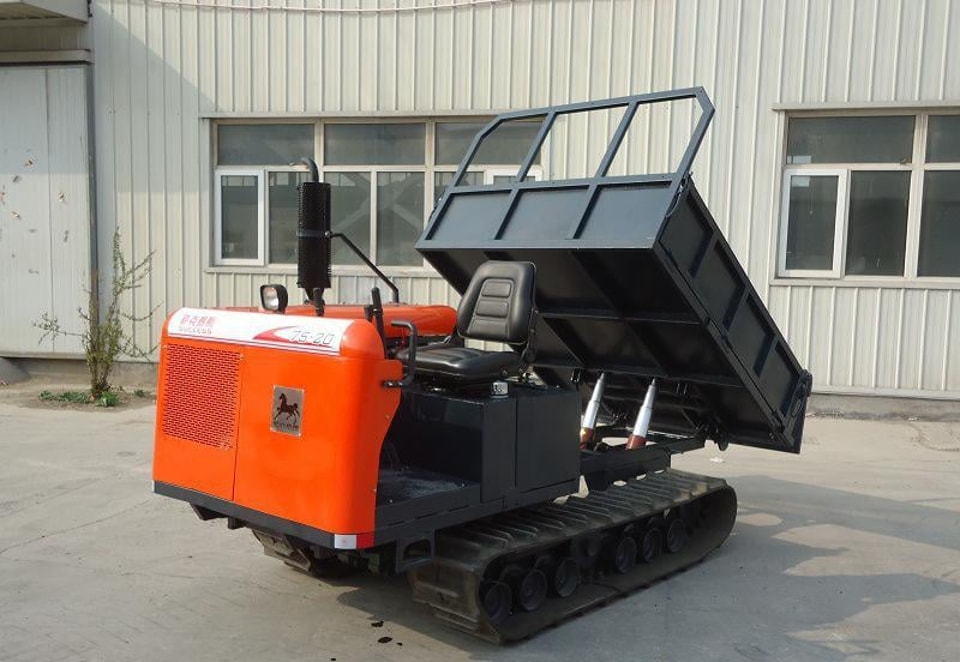
In order to adapt to the transportation characteristics of the mountain orchard road environment, according to the walking characteristics of the crawler truck, the overall design requirements of the mountain orchard crawler truck based on improving the anti-rollover performance are proposed. On the basis of completing the design of each assembly, with the goal of improving the anti-rollover performance of the transporter, the anti-rollover design of the overall layout of the mountain orchard crawler transporter was completed. A three-dimensional solid model of the whole vehicle was established and simulated, and the results met the design requirements and shortened the design cycle. The proportion of fruit in the agricultural output value of our country is increasing, but the mechanization of fruit production is obviously lagging behind, especially in orchard transportation. For example, 90% of citrus fruits in my country are planted in hilly and mountainous areas with complex terrain. However, the transportation of fruits and agricultural materials during the planting and harvesting process is still dominated by human transportation, with low production efficiency and high labor intensity. The traditional wheeled agricultural transport vehicle lacks the specificity of the terrain. At present, foreign agricultural transport vehicles can be basically divided into Japanese and Korean models, Italian-German models, British-French models and American-Canada models. The geographical environment of Japan and South Korea is mainly mountainous, and the scale of farming is not large, making self-propelled crawler and wheeled small transport vehicles popular. The terrain of Italy and Germany is characterized by hilly and mountainous areas, but mainly farm management, mainly using independent agricultural transport vehicles and agricultural tractor deformation transport vehicles. The geographical environment of many European countries such as Britain and France.
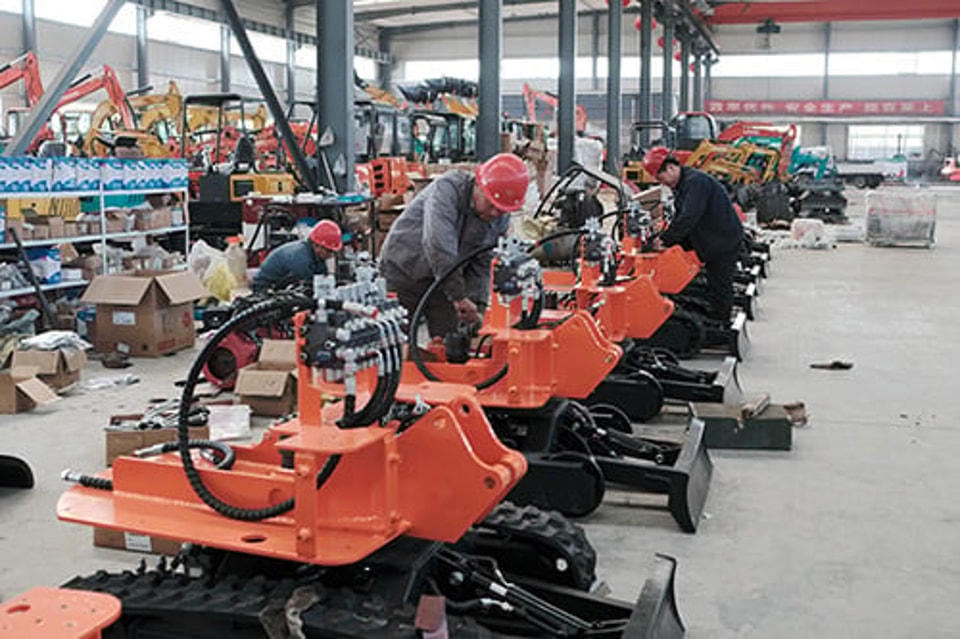
Why Hydraulic Cylinder Maintenance Matters Hydraulic cylinders are what make your excavator dig, lift, and swing. They convert hydraulic fluid pressure into mechanical force – and they do it thousands of times a day. When a cylinder fails, the machine stops. And cylinder failures are almost always preventable with regular maintenance. Here are the 5 most important maintenance tasks for small excavator hydraulic cylinders – and how to do them. 1. Change the Hydraulic Oil and Clean the Filter Regularly Hydraulic oil is the lifeblood of the system. Over time, it breaks down, accumulates moisture, and picks up contaminants from normal wear. Dirty oil is the #1 cause of cylinder failure. What to do: Follow the manufacturer's recommended oil change interval – typically every 1000-2000 operating hours, depending on the machine and working conditions. When you change the oil, clean or replace the filter screen at the same time. Why it matters: Clean oil keeps the cylinder seals lubricated and prevents abrasive particles from scoring the cylinder walls. A $50 oil change can prevent a $500 cylinder rebuild. 2. Lubricate the Moving Parts Cylinder rods, pins, and bushings need regular lubrication. When they run dry, metal rubs on metal – and that causes rapid wear. What to do: Grease the cylinder rod ends, pivot pins, and bushings daily – or at least every 8-10 operating hours. Use a high-quality lithium-based grease that's rated for the working conditions. Why it matters: A dry pin wears out in weeks. A lubricated pin lasts for years. Grease is cheap. Cylinder replacement is not. 3. Check Bolt Tightness Vibration from normal operation loosens bolts over time. Loose bolts on cylinder mounts, rod ends, and hydraulic connections can cause misalignment, leaks, and sudden failure. What to do: Check the tightness of all cylinder-related bolts weekly. Use a torque wrench and follow the manufacturer's specifications – don't just guess. Why it matters: A loose cylinder mount shifts under load, which wears the rod and seals unevenly. Tight bolts keep everything aligned and working as designed. 4. Control the Oil Temperature Hydraulic oil has an ideal operating temperature range – typically between 40-80°C (100-175°F). When the oil gets too hot, it thins out and loses its lubricating properties. Seals become soft and wear out faster. What to do: Watch the temperature gauge. If the hydraulic oil temperature regularly exceeds 80°C, check the cooler, clean the fins, and verify that the relief valve isn't stuck. Avoid continuous heavy work without giving the machine a break. Why it matters: Every 10°C above the recommended temperature halves the life of the hydraulic seals. A hot oil problem is a cylinder problem waiting to happen. 5. Keep Dust and Debris Out The dust seal is the cylinder's first line of defense. When it fails, dirt and sand get into the cylinder, scoring the rod and wearing out the main seal from the inside. What to do: Wipe down the cylinder rod before and after each shift. Check the dust seal for cracks or damage. In dusty working conditions, clean the seal area daily with a soft cloth. Why it matters: A scratched cylinder rod is expensive to repair – it requires re-chroming or replacement. A clean rod and intact dust seal prevent that damage from happening in the first place. Other Important Considerations Use the right oil for the season. In summer, use a higher-viscosity oil that maintains its thickness at high temperatures. In winter, use a lower-viscosity oil that flows easily in cold weather. The wrong oil for the season reduces performance and increases wear. Avoid overloading the machine. Overloading puts extra pressure on the hydraulic system, which stresses the cylinders and seals. If the relief valve is constantly opening, you're pushing the machine too hard. Work on level ground when possible. Operating on slopes puts uneven loads on the cylinders, which causes uneven wear. If you must work on a slope, minimize the time spent with the boom fully extended.
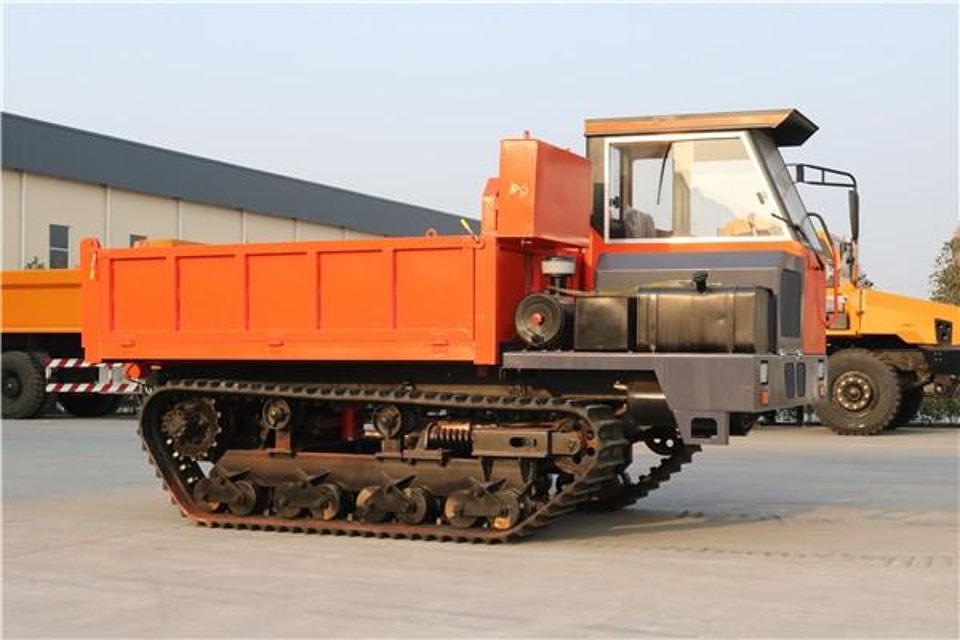
In the fruit harvest season, our staff need to quickly transport the fruits to the consumer market in a short period of time. Due to the lack of transportation machinery in mountain orchards, this problem has become increasingly prominent, which has seriously affected the development of the orchard planting industry and the improvement of the economic benefits of fruit farmers. . But friends who work in this area are not confused by the problems mentioned at the beginning of the article. What is the reason? , Agricultural crawler trucks have solved this problem, and in this way this equipment began to appear around us at work. Advantages of agricultural crawler equipment In order to facilitate single-person operation, simplify the structure, reduce costs, and maintain the flexibility and stability of the vehicle body, the single-track transport vehicle device is selected as the core device for the agricultural crawler transporter. In this design, gasoline engine is used as the power source, the single-track transport vehicle mechanism is used as the walking system, the worm gear drive and chain drive are used as the drive system, and the belt tensioner is the clutch. The structure of the whole vehicle is simple and the operation is convenient. The agricultural crawler transport vehicle adopts the modular design concept, which is composed of four parts: power unit, transmission system, crawler transport vehicle system, frame and widening device. At present, self-propelled large-slope single-track and double-track conveyors have emerged in the country for vertical transportation in mountainous areas. However, horizontal transportation still relies on traditional livestock hauling and trolleys. Power machinery is urgently needed to solve the problems in mountain orchards. Transportation issues. Taking into account the special terrain conditions of the mountain, through the comparison of several transportation modes such as wheeled, crawler and hand-held, the crawler structure is selected. But we can choose the equipment to use according to our own working conditions. If you need this equipment, you can call our company's contact information to understand the product docking with our staff.
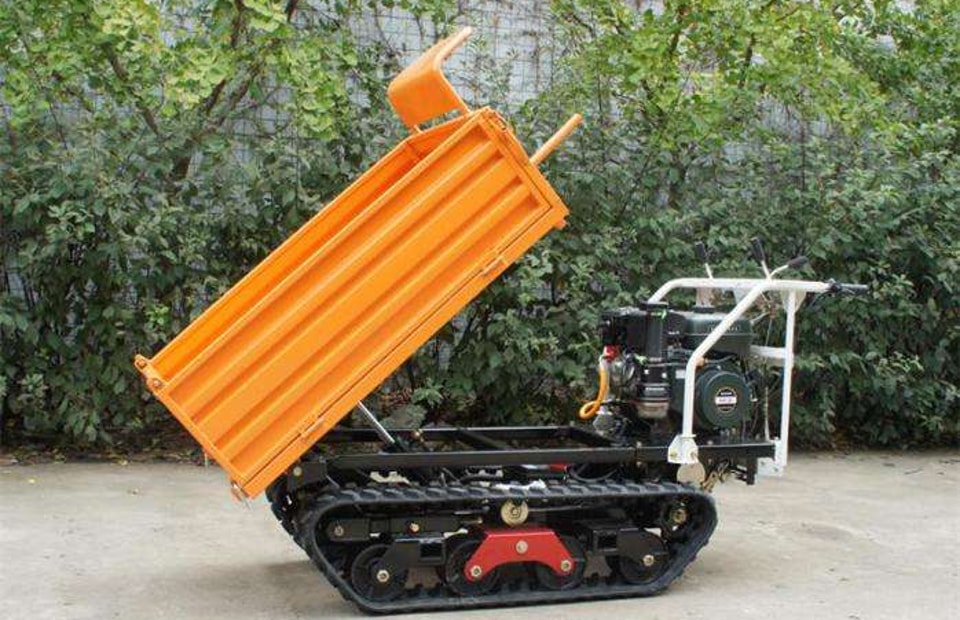
Crawler transporter is a commonly used transporter, its use effect is very good, and it has high working efficiency and powerful functions. The scope of application is wide. However, tire slip is unavoidable for every vehicle. Here's how to deal with tire slip of a crawler truck: 1. If the front wheel of the tracked transporter slips, the steering wheel cannot be turned. The vehicle should be facing forward and the vehicle should be straight forward until it stops at an obstacle. If the wheel rotates, the steering wheel can be turned until the recovery is normal. . 2. When the rear wheel of the Cangzha crawler transporter slips, the rear body slides, no matter which direction the number of vehicles declines, the direction of the anti-skid steering wheel during this period and ensure that there is no brake, all movements should be as gentle as possible. 3. When the four wheels of the Cangzha crawler truck slip, the speed of the car is faster than usual. When we don’t find the grip in the front, all actions should be gentle, so that the vehicle will run slowly until it slips.
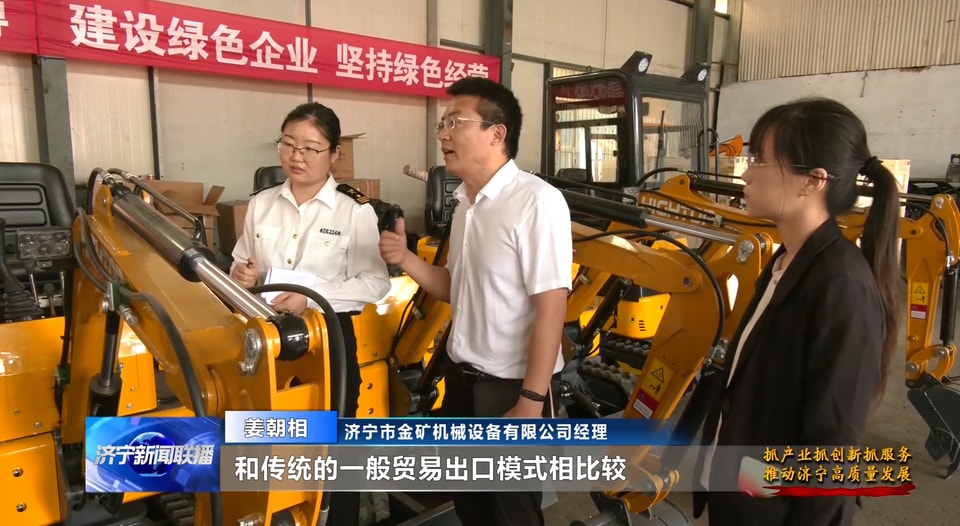
In the work of optimizing the business environment, Jining City has implemented "direct export of cross-border e-commerce enterprises to enterprises", constantly breaking away from traditional thinking and breaking traditional paths, and effectively providing convenience for enterprises in terms of handling procedures and helping high-quality industrial development. While continuously optimizing the approval process, Jining City strives to create an excellent business environment in the field of foreign trade exports. A few days ago, a batch of machinery and equipment from Jinkung Industrial (Shandong) Corporation a subsidiary of Shandong Hightop Machinery Group Co., Ltd., has cleared customs. This is the first time that a company in our city has handled related businesses through the “direct export of cross-border e-commerce enterprises to enterprises”. Significantly improved. Wang Rui, deputy head of the Comprehensive Business Section of Jining Customs, said that companies can enjoy a series of preferential policies including "one registration, one-point docking, priority inspection, and convenient return management". The entire process is paperless operation, which opens up opportunities for small, medium and micro enterprises. Fast-track customs clearance for cross-border e-commerce goods. Jiang Chaoxiang, manager of Jinkung Industrial (Shandong) Corporation told reporters: "Compared with the traditional general trade export model, there are fewer documents to be transmitted and fewer items to be declared. The entire declaration process can be completed in about 20 minutes, and the work efficiency An increase of more than 50% has helped us save employment costs and also improved customs clearance efficiency." "Cross-border e-commerce enterprise-to-enterprise direct export" means that domestic enterprises establish contact with foreign enterprises through cross-border e-commerce platforms, complete the process of placing orders and payment online or offline, and realize the export of goods. Xie Tian, deputy chief of the Enterprise Management Section of Jining Customs, said that all goods exported in accordance with the cross-border e-commerce model can go through customs procedures such as declaration and inspection in Jining. After release, they can be transferred to the port for departure procedures and customs clearance time. And the cost of customs clearance can be further compressed. Prior to this, all cross-border e-commerce had to be exported through ordinary foreign trade, and the procedures were relatively cumbersome. This year, our city was included in one of the 22 pilot regions in the country to carry out the business of "direct export of cross-border e-commerce enterprises to enterprises". Zhang Fengyan, deputy section chief of the Inspection Section of the Jining Customs Office in Qufu, told reporters that enterprises handling export business through this model can not only directly talk to overseas consumers and small and medium-sized enterprises, reduce intermediate circulation links in international trade, further increase profits, and effectively cultivate enterprises. Brand, expand development space. In order to promote the development of the city’s new foreign trade business, since this year, Jining Customs has organized business backbones to go to counties and cities to hold policy briefings, promote relevant policies to more than 370 companies, and cooperate with the Municipal Bureau of Commerce to cultivate companies that are interested in doing business. Helped 82 enterprises in the jurisdiction to complete the customs filing of cross-border e-commerce. Zhou Tao, Deputy Commissioner of Jining Customs, said: “In the next step, we will continue to strengthen collaboration with commerce, taxation and other departments, optimize service supply, and promote the expansion of cross-border e-commerce enterprises’ export business to enterprises, and create a strong foundation for the development of Jining’s foreign trade economy. New growth point."
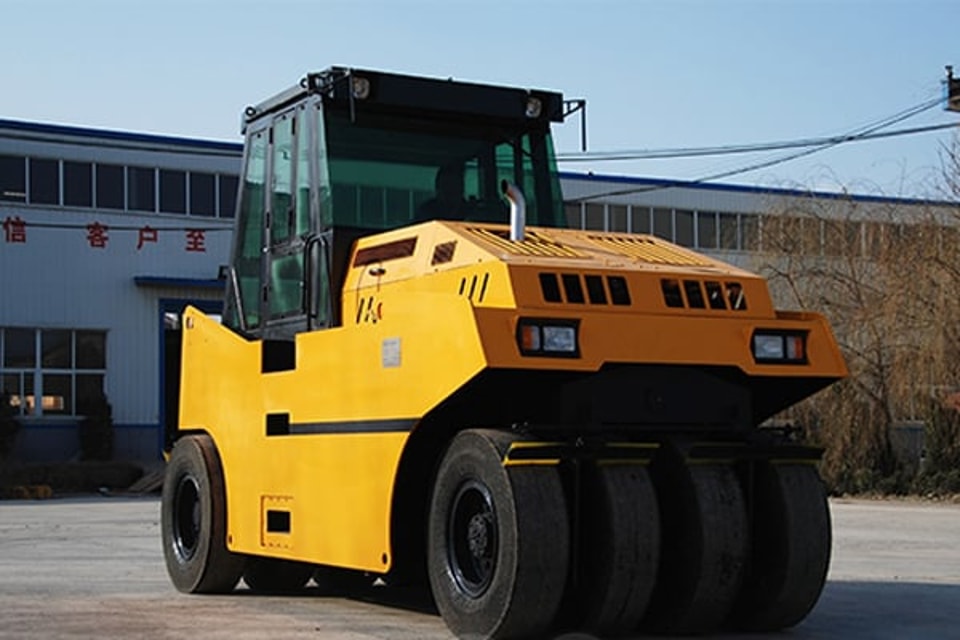
What Is a Static Roller Compactor? A static roller compactor is a heavy machine that uses its own weight – not vibration – to compress soil, gravel, asphalt, or other materials. The steel drums roll over the surface, applying pressure evenly to achieve the required density. Unlike vibratory rollers, which use a vibrating drum to shake material into place, static rollers rely purely on weight and momentum. They're simpler, easier to maintain, and often more reliable for certain types of compaction work – especially on granular materials like gravel and sand. Here are the 8 practical advantages that keep static rollers on job sites year after year. 1. Operator Comfort – You Spend All Day in the Seat Cab visibility matters when you're working inches from the edge of a sub-base or asphalt mat. Static rollers typically have spacious cabs with wide-view windows, so operators can see the drum edges clearly without craning their necks. Air conditioning and heating are available options – not a luxury when you're working through summer heat or early spring mornings. Comfort isn't about being nice to the operator. It's about keeping them alert and accurate for an entire shift. A tired operator makes mistakes. A comfortable operator gets the compaction right the first time. 2. Articulated Steering – Less Rework, Better Coverage Articulated steering means the machine bends in the middle, not just at the front wheels. This allows the rear drum to follow the same path as the front drum, even when you're turning or changing compaction lanes. Why does that matter? Consistent overlap. When the rear drum follows the front drum's path exactly, you get even compaction across the entire width of the pass. No missed strips. No over-compacted spots. No rework. 3. Power Sprinkler System – Stop Asphalt from Sticking Asphalt sticks to steel drums. When it does, you get a rough, uneven surface that fails inspection. The sprinkler system on a static roller keeps the drums wet – just enough to prevent sticking without flooding the work area. Quality static rollers use a multi-stage filtration system for the sprinkler water. Clean water means nozzles don't clog. Nozzles that don't clog means consistent spray. Consistent spray means clean drums. Clean drums means a smooth finished surface. 4. Drivetrain and Components Built for the Job Static rollers use drive axles specifically designed for compaction work – not repurposed truck axles. The difference shows up in durability. A roller axle handles constant weight, constant turning, and constant heat without premature wear. Maintenance-free batteries and sealed electrical systems mean fewer things to check before a shift. You start the machine, check the fluids, and get to work. No chasing electrical gremlins. Front and rear mud scrapers keep debris from building up on the drums. Sand-filling ports let you adjust the line load to match the material you're compacting – heavier for asphalt, lighter for granular sub-base. 5. Simple Transmission – Three Speeds Forward, Two Reverse You don't need a dozen gears on a compactor. The transmission on a static roller typically offers three forward speeds and two reverse speeds – enough to handle the compaction pass and repositioning between passes. Single-handle shifting keeps the operator's other hand on the steering wheel. Air-assisted clutch and cable control make the shifts smooth and light. At the end of a 10-hour shift, that reduced effort adds up to less fatigue and more consistent work. 6. Fuel Efficiency and Emissions – Lower Operating Cost Modern static rollers use turbocharged diesel engines that meet current emission standards without sacrificing power. Low noise output is a bonus – especially on urban job sites where noise restrictions are strict. The engine is sized for the work. It's not over-powered (wasting fuel) or under-powered (struggling to maintain speed on inclines). It's matched to the weight and rolling resistance of the machine, which means you're not burning extra fuel to move a machine that's already heavy enough to do the job. 7. Braking System – Safety Without Complication Static rollers use a dual braking system – emergency braking and parking brake. The emergency brake is air-over-oil, which provides reliable stopping power even in wet or muddy conditions. The parking brake is cable-operated, simple and dependable. Neutral start protection prevents the machine from starting in gear – a basic safety feature that prevents unexpected movement when you turn the key. It's simple, but it matters on a crowded job site. 8. Easy Maintenance – Less Downtime, More Work Done The engine hood on a static roller opens wide, exposing all the common service points – oil fill, filters, coolant reservoir, and battery terminals. You don't need to disassemble half the machine to check the fluids or change a filter. This matters on a job site where downtime is measured in lost production, not just repair costs. A machine that's easy to service spends less time in the shop and more time on the mat. Interested in other types of compaction equipment? Explore our full range ofroad rollers– from handheld units to full-hydraulic models – to find the right machine for your job site.

Enquiry about